Desert Online General Trading LLC
Dubai, United Arab Emirates
Desert Online General Trading LLC
Dubai, United Arab Emirates


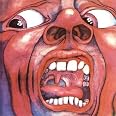
In The Court Of The Crimson King
S**O
a timeless masterpiece in early progressive rock
Blending elements of several forms of music, including classical, jazz, and folk, four young British musicians banded together in 1969 as King Crimson and recorded a five-song masterpiece. Looking back in time to the year when this album was released, it has oftentimes been said that King Crimson's first album, "In the Court of the Crimson King", was a milestone in rock music history that marked the beginning of a new branch in rock music henceforth called, "progressive or art rock." However, it would be amiss to claim here that this group had accomplished this feat all alone. There were a number of other prominent rock groups at the time such as The Moody Blues and Deep Purple who were likewise experimenting along the same lines. Both of these groups had also been strongly influenced by classical music, and The Moody Blues, in particular, released two groundbreaking albums that same year. These two albums, "On the Threshold of a Dream" and "To Our Children's Children", were phenomenal in their own right. Like King Crimson, The Moody Blues prominently used a relatively new instrument at that time called, the mellotron. In addition, certain harsh and heavy passages from this album by King Crimson have, at times, been credited as being a strong influence in the formation, and early development, of yet another form, or branch, of rock music, namely, "heavy metal." And now, and most fortunately, King Crimson's debut album, "In the Court of the Crimson King", has, once again, been remastered using the latest advances in digital technology for future generations to appreciate and enjoy.The early stages of this group's formation saw three friends, Robert Fripp, Michael Giles, and Peter Giles, enter the studio and record a number of songs together under the name of "Giles, Giles, and Fripp." Robert Fripp was a versatile guitarist with the ability to play a wide range of styles. Along the way, they were joined by Ian McDonald, a multi-instrumentalist, who played various woodwind instruments and who also played a number of different keyboards, including the mellotron. When one of the Giles brothers left the band, he was soon replaced with Greg Lake on bass and vocals. With the final addition of Peter Sinfield as lyricist, the group was formed. The year was late 1968.The album's strong appeal, no doubt, lay in the group's prominent use of the mellotron. Without its use, the album would certainly not have reached masterpiece status. This instrument (actually, an amalgam of prerecorded tapes) replaced the diverse sounds of an entire philharmonic orchestra. Rock groups had already been experimenting, and recording, with the mellotron for sometime, ever since the Summer of Love. The Rolling Stones, for one, first began to use the mellotron in 1967 when they were writing songs for their upcoming album, "For Their Satanic Majesties Request." The Rolling Stones, too, had a talented multi-instrumentalist in Brian Jones. During the psychedelic era, musicians from various groups, ranging from David Bowie to Pink Floyd, took an interest in, and a quick liking to, the mellotron, especially with its outworldly sounds. However, the Stones soon returned to their R&B roots, abandoning further experimentation in that direction with the mellotron. The Moody Blues, on the other hand, who had previously employed the full services of the London Philharmonic Orchestra, found the mellotron to be a suitable replacement for the orchestra, and they soon integrated the new instrument into their recordings (and also into their upcoming touring plans.) Mike Pinder of The Moody Blues became quite proficient with its use.The Rolling Stones did not forget their brief experimentation with the mellotron, and their affection towards it. And when it came time to introduce to the public, especially their fans, their new line-up in the summer of 1969, featuring guitarist extraordinaire Mick Taylor, at a free concert in London's Hyde Park, they invited King Crimson to precede them on stage. It was a great honor. The group's unconventional approach to rock music that day blew away the crowd. Needless to say, these Stone's fans knew that they had just experienced something very special musically, something new and refreshing. It had been the public debut of King Crimson!The end for King Crimson's stellar initial line-up was nonetheless near. While on tour in North America to support the release of their debut album, tensions within the band became apparent. Giles and McDonald declared that they planned to leave the band at the conclusion of the tour and record together. Their ensuing album entitled, "McDonald and Giles", unsurprisingly had much of the same feel as King Crimson's debut album. It is worth a listen. Greg Lake soon thereafter left the band, too, to form the supergroup, Emerson, Lake, and Palmer, with Keith Emerson on keyboards (formerly with the band, The Nice) and Carl Palmer on drums (formerly with Atomic Rooster.) This band's popularity, especially with fans of progressive rock, soon eclipsed the popularity of King Crimson. Before he left King Crimson, however, Greg Lake began work with the remaining members of the band on several tracks for the band's second album, "In the Wake of Poseidon." Further down the line, Ian McDonald founded another prominent group in the mid-1970's. This band, Foreigner, with time, made its own significant contribution to rock music history, too.
D**Y
Rock Classic
This is a rock classic, and one of my favorite1960s albums. In 2015, Rolling Stone named “In the Court of the Crimson King” the second greatest progressive rock album of all time. Ironically, at the time of its release in 1969, musicians appreciated it much more than the professional critics. Jimi Hendrix saw Crimson at London's Marquee club and declared them the best band in the world. Bill Bruford who was playing with Yes at the time, agreed. Yes realized they had to work harder after seeing this version of Crimson live. This album raised the bar and inspired a lot of musicians.This is my favorite version of King Crimson. Robert Fripp, Greg Lake, and Michael Giles came from Bournemouth on England's south coast. Fripp and Lake shared a guitar teacher growing up, but Lake played bass in Crimson. Fripp would later work with John Wetton, Gordon Haskell, and Andy Summers (The Police) who were also raised in Bournemouth. Greg Lake nearly formed a band with Al Stewart and Lee Kerslake (Ozzie Osbourne) who were also from Bournemouth.King Crimson had serious chops, but the songs and melodies were also great. They used a wide range of instruments and musical styles, from hard rock to jazz. Bob Fripp is one of rock’s finest guitarists, but his playing on the album is tasteful. Robert was known as Bob in 1969. Michael Giles was a great drummer and sounded like nobody else. Greg Lake does a great job as the lead singer and bass player. Three of the five compositions are joint group collaborations. Ian McDonald wrote the music for the title track and "I Talk to the Wind." Peter Sinfield came up with the strange lyrics, that somehow seems appropriate. Ian McDonald was a superb all-around musician, playing sax, flute, keyboards, and guitar.I prefer the folkie version of "I Talk to the Wind" recorded with Judy Dyble on lead vocals in 1968. Dyble had been the lead singer of Fairport Convention. She was also Ian McDonald's girlfriend and Fripp's landlady in the early 1970s. The Dyble version was recorded by McDonald, Fripp, and Michael Giles in a London flat. It appears on the "Young Persons Guide to King Crimson." Dyble, Fripp, and McDonald reunited in 2009 to play on her solo album.Unfortunately, Crimson split-up after this record. Surprisingly, the break-up was not Fripp's fault, McDonald seemed to accept the blame when the band met to plug a live album in 1994. Lake formed ELP and McDonald later became a founder member of Foreigner. Foreigner's sound had a lot to do with McDonald. Giles became a session musician. Lake and McDonald seemed to view this album as the musical highlight of their careers.This remaster sounds great. I owned the album on vinyl in the 1970s and then bought one of the first versions on CD. That CD sounded awful. In 2003 they found the original tapes in a vault and the sound on this CD is crisp and clear. It has been said that your taste in pop music as a teenager stays with you for life. In the Court of the Crimson King is one of those albums that I frequently return to. They don't make records like this anymore.
J**T
Classic Prog Rock
This is a classic progressive rock album by one of the original progressive rock bands. This lineup of King Crimson is hard to beat, especially Greg Lake's vocals. When I first got this album in vinyl, probably 1970 (it was released at the end of 1969) I didn't think the first song, "21st Century Schizoid Man" fit with the rest music on the album. Sometimes I was just not in the mood for that song and would drop the needle on the second track. Over the years the song has grown on me, and I do not skip it anymore. I'm sure this might horrify some fans who may think it is the best song on the album, but the song is a little harsh. The rest of the album is not, it is more melodic.As I stated, I have had this album on vinyl since it was first released. After getting a new turntable and cartridge I realized I needed a new (clean) copy, giving me 2 vinyl versions. After I "rediscovering" this albumxs great sound and music I decided it was time to upgrade (yes upgrade) to a CD version. I was not disappointed. The CD version extends the dynamics and frequency enough that things I barely noticed before were much clearer on the CD. The other benefit is being able to load the music on to my portable devices. I highly recommend this version because the sound quality is outstanding for a recording this old.I also have the 40th anniversary edition (CD & DVD). However, I have never done a side by side comparison. I'm sure the sound quality is the same if both were produced from the same master tapes. The difference would be in how Steve Wilson re-mixed the album, which is usually different, but not always better. This version sounds the way I remember the original vinyl record sounded. You really can't pass on this classic album if you are a fan of Prog Rock.
Trustpilot
5 days ago
3 weeks ago