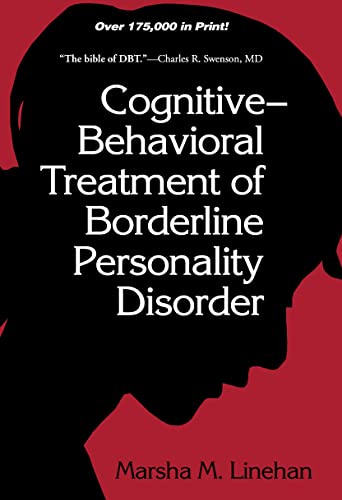

Cognitive-Behavioral Treatment of Borderline Personality Disorder: 9780898621839: Medicine & Health Science Books @ desertcart.com Review: Essential for Anyone Wanting to Understand BPD - I am recovering from this disorder. I have been in mental hospitals and spent years in therapy. I have read Masterson, and David P. Celani's translation of Fairbairn (who corrected Freud's mistake on object relations theory so it makes practical sense and actually is helpful in understanding thought processes of trauma victims. Very enlightening). These were my favorite books on the subject until this. Most books about BPD are written by observers from an external perspective. They don't understand what's really going on inside and the help they offer isn't dead on target like Marsha Linehan's is. She is recovering from BPD herself and spent years of agony before turning it all around to become a therapist who can reach people in pain on THEIR level. She doesn't talk down and she didn't get it all out of a book. She knows. I have gotten immeasurable help following the approach in this book. I also like a complementary book, the autobiography of another recovering borderline, who was helped using the techniques created by Dr. Linehan: "The Buddha and the Borderline" by Kiera Van Gelder. As it is a story and not a psychology book, it is easier to understand. Review: Worth reading! - This is a textbook and not particularly easy reading for the layperson. However the information presented is valuable to both therapist and patient. Not only does it give hard facts on studies done about both BPD and this type of treatment on the disorder, but it does an excellent job of explaining the concept of DBT, the variant of CBT that has been successful for patients with BPD. The very basis of Dialectical Behavioral Therapy can be confusing and difficult to grasp, but the book does a great job with it. Dr. Linehan goes into specific details of the therapy itself, what is required of both patient and therapist and common problems that interfere with the success of the therapy--and that's only the first few chapters. I'm not a fan of expensive textbooks, and this is not one you'll find cheap even used, but in my opinion it was well worth the money spent for a better understanding.
| Best Sellers Rank | #43,844 in Books ( See Top 100 in Books ) #46 in Personality Disorders (Books) #46 in Medical Clinical Psychology #76 in Social Work (Books) |
| Customer Reviews | 4.7 4.7 out of 5 stars (560) |
| Dimensions | 6.25 x 1.25 x 9.5 inches |
| Edition | 1st |
| ISBN-10 | 0898621836 |
| ISBN-13 | 978-0898621839 |
| Item Weight | 2.1 pounds |
| Language | English |
| Part of series | Diagnosis and Treatment of Mental Disorders |
| Print length | 558 pages |
| Publication date | May 14, 1993 |
| Publisher | The Guilford Press |
C**E
Essential for Anyone Wanting to Understand BPD
I am recovering from this disorder. I have been in mental hospitals and spent years in therapy. I have read Masterson, and David P. Celani's translation of Fairbairn (who corrected Freud's mistake on object relations theory so it makes practical sense and actually is helpful in understanding thought processes of trauma victims. Very enlightening). These were my favorite books on the subject until this. Most books about BPD are written by observers from an external perspective. They don't understand what's really going on inside and the help they offer isn't dead on target like Marsha Linehan's is. She is recovering from BPD herself and spent years of agony before turning it all around to become a therapist who can reach people in pain on THEIR level. She doesn't talk down and she didn't get it all out of a book. She knows. I have gotten immeasurable help following the approach in this book. I also like a complementary book, the autobiography of another recovering borderline, who was helped using the techniques created by Dr. Linehan: "The Buddha and the Borderline" by Kiera Van Gelder. As it is a story and not a psychology book, it is easier to understand.
J**H
Worth reading!
This is a textbook and not particularly easy reading for the layperson. However the information presented is valuable to both therapist and patient. Not only does it give hard facts on studies done about both BPD and this type of treatment on the disorder, but it does an excellent job of explaining the concept of DBT, the variant of CBT that has been successful for patients with BPD. The very basis of Dialectical Behavioral Therapy can be confusing and difficult to grasp, but the book does a great job with it. Dr. Linehan goes into specific details of the therapy itself, what is required of both patient and therapist and common problems that interfere with the success of the therapy--and that's only the first few chapters. I'm not a fan of expensive textbooks, and this is not one you'll find cheap even used, but in my opinion it was well worth the money spent for a better understanding.
A**R
Must read for anyone working with BPD
This is a slog of a read, but it will absolutely change how you approach working with BPD and self-harm.
B**H
probably the best DBT book
Very informative. Is not too easy of a read. Even my professor states that he has had a hard time but that over the years he's gotten much better at figuring it out. Good book to have.
A**K
Deep theoretical therapy foundations and concerns
Great book, but not to be confused with a DBT workbook.
S**7
I got this book because of interest in Cognitive Behavioral Therapy.
This book was one of more than a few I purchased because I stumbled across Cognitive Behavioral Therapy. I since found a therapist who specializes in this treatment. If you aren't familiar with it this type of therapy works with changing how the mind thinks when it comes to issues, instead of treatment with drugs. I have an injury and have been dealing with non-stop pain for quite a long time which has changed my personality, along with lifestyle and life outlook. After years of suffering and being prescribed massive amounts of pharmaceuticals and being sent on my way, and me not believing in taking so many, if any pharmaceuticals, I went searching for a different way of treatment. I am so very glad I stumbled across CBT (Cognitive Behavioral Therapy), this type of treatment is fantastic when it comes to helping with any form of pain, life changing trauma and/or mental issue. Even if one has a mental issue that needs pharmaceuticals as a form of treatment, CBT goes a long way when it comes to additional treatment and a permanent solution to issues. In addition to getting these types of books, which are very helpful seeking a therapist who can help you can really change your life. CBT therapy isn't long term therapy that lasts long after your pocketbook or insurance has been exhausted; True CBT therapy is treatment that lasts a certain amount of time, but be prepared to do a lot of hard work while going through the therapy outside the appointments. Please do check into this type of therapy and get these types of books during or ahead of time when it comes to treatment; but make sure the therapist you seek out is truly a CBT therapist. Wonderful life changing (for the better) therapy.
B**N
This book takes the struggle out of working with BPD
This book is designed for use in skill training groups for BPD. The author offers advice on adapting it to be used in individual therapy however. Linehan is forging a place in the mental health field as the foremost clinican in dealing with BPD. The reader is immediately aware of the extensive amount of research that went into this book. The author is not writing about opinion, she is writing about the results of years of extensively scrutinzing the work of herself and others. On the downside the book has the amount and quality of information one would expect from a textbook. This is not light reading, it is however a page turner (as far as academic texts go) if you have ever felt inadequate when dealing with BPD. After applying the ideas in this book I found that BPD was not the same beast in treating than in the past.
P**S
Outstanding for any Therapist
I loved this book and will use it as my Bible forever. Marsha Linehan is amazing. Great book to read in depth and it use as a reference.
J**E
Abridged version of review (non-abridged version follows): Marsha Linehan’s book on Dialectical Behavior Therapy (DBT) is a comprehensive and rigorous resource, ideal for those seeking a deep understanding of the therapy. While some may find it overwhelming, it offers unmatched insights, particularly in working with high-risk clients and integrating mindfulness into therapy, shaped by Linehan’s Zen Buddhist background. Her unique perspective as both a former patient and pioneering therapist adds authenticity. Despite the book’s depth, Linehan acknowledges that some aspects of DBT are best learned through practical experience. DBT has gained wider acceptance since its inception and has evolved from Cognitive Behavioral Therapy (CBT), while remaining distinct. Linehan’s work incorporates insights from behaviorism, cognitive and humanistic psychology, and addresses issues like ethics and therapist-patient dynamics. Though DBT is highly effective, new findings in neuroscience, such as the Therapeutic Reconsolidation Process (TRP), challenge traditional therapies like DBT by offering faster, more permanent emotional change. However, DBT remains essential in situations where deep emotional work isn’t feasible, and it’s expected that Linehan will continue adapting her methods to stay relevant in an evolving field. For those serious about DBT, her book remains indispensable, though it may benefit from integration with newer approaches like TRP. Non-abridged version of review: For those seeking a comprehensive understanding of Dialectical Behavior Therapy (DBT), Marsha Linehan’s book is the definitive resource. It’s not light reading—it feels like preparing for professional certification, with its rigorous and systematic approach. Readers who appreciate in-depth exploration will find immense value here, while those preferring a more intuitive style may find it challenging. Linehan herself acknowledges that certain aspects of DBT are best learned through hands-on practice, noting that “as with any skill (including those you teach a patient), the craft is frequently in the timing.” Despite its complexity, the book offers unmatched depth. As the first to incorporate mindfulness into therapy, Linehan brings a unique understanding of dialectical thinking, shaped by her Zen Buddhist background. Her dual perspective as both a former patient and pioneering therapist adds authenticity to her work. A key strength of DBT is its structured, evidence-based approach, making it highly effective with high-risk clients. The emphasis on the patient-therapist relationship often takes on a “reparenting” role, fostering self-compassion. While her methods may at times seem direct—even bordering on coercive with suicidal patients—they have proven successful. Since its inception, DBT has gained broad acceptance, overcoming initial resistance (even from the publisher, who hesitated to include “Dialectical” in the title). Now, more than 30 years later, DBT is a cornerstone of Cognitive Behavioral Therapy (CBT). DBT represents a significant evolution of CBT, blending elements from First Wave and Second Wave cognitive restructuring practices, and aligning closely with Third Wave CBT, such as Acceptance and Commitment Therapy (ACT). Both approaches integrate cognitive diffusion strategies from mindfulness meditation but maintain their own distinct frameworks. Linehan weaves together insights from behaviorism, cognitive psychology, and humanistic psychology, making this book essential for both students and seasoned professionals. For anyone interested in DBT, whether new or experienced, Linehan’s work is indispensable. She tackles complex issues like professional ethics and the subtle power dynamics in therapy, while also acknowledging the limitations therapists face. One of her most valuable insights is her recognition that borderline patients are particularly sensitive to therapist inauthenticity. When practiced with precision, DBT’s high standards can lead to transformative outcomes. However, its effectiveness can be compromised if not applied carefully, particularly in settings where access to well-trained professionals is limited. While Linehan’s book remains a landmark in DBT and CBT, future adaptations may be needed as therapy evolves. Emerging neuroscience findings, such as the Therapeutic Reconsolidation Process (TRP), challenge traditional symptom-management approaches like DBT, CBT, and Rational Emotive Behavioral Therapy (REBT). TRP, discovered in the late 1990s, focuses on erasing maladaptive emotional patterns at the neural level through schema disconfirmation and nullification (depotentiation). This approach of discovery, integration, and transformation of symptom-generating implicit schemas offers deeper, lasting change, whereas conventional counteractive therapies manage, rather than resolve, emotional patterns. As neuroscience increasingly validates TRP, it’s likely to shape the future of therapy. However, DBT’s structured, skill-based approach remains crucial—especially in crisis intervention and harm prevention, where deep emotional work may not be feasible yet. DBT’s focus on building skills and utilising resources provides essential support in these situations. Given Linehan’s innovative track record, it’s likely she will continue adapting DBT to integrate new scientific developments, ensuring its relevance in an ever-changing field. For anyone serious about understanding or practicing DBT and CBT, her book remains an authoritative guide. However, it’s worth considering alongside TRP-based approaches, which are emerging in considerable numbers today; and may represent the future of therapy—perhaps something akin to a “DBT 2.0,” integrating deeper, resolution-based methods like Schwartz’s Comprehensive Resource Model (CRM) for example.
G**A
Fantastic
B**N
Parece que estoy leyendo solo artículos científicos
B**E
Great for clinicians, wanting to use dialectical behavioural therapy. This is the original manual. Very dense, lots of information. Good learning tool.
M**L
Für den an Psychologie und Psychotherapie interessierten ein Must Read. Ein Meisterwerk der Psychotherapie - auch wenn ich jetzt nicht überprüft habe, ob das Werk auch tatsächlich als solches im gleichnamigen Buch verzeichnet ist. Und die Autorin schreibt ja auch nicht so viel. Daher: Trotz des sehr hohen Preises eine Kaufempfehlung Vom Schreibstil besticht das Buch durch eine klare und schlüssige Argumentation. Die Autorin hat sich Zeit genommen Begriffe ausführlich zu besprechen und zu beleuchten, wie sie in ihrer Sichtweise in die Therapie eingebettet werden. Über das ganze Buch spürt man sowohl die Wissenschaftlerin als auch die Spiritualität des Menschen Marsha Linehan - es ist nachvollziehbar, dass hier jemand schreibt, der nicht nur über eine ausgeprägte Fähigkeit verfügt in Begriffen, Konzepten, rationalen Argumenten zu denken, sondern diese auch durch und durch selbst verkörpert. Kritische und schwierige Themen werden nicht, wie in vielen anderen ähnlichen Werken, ausgespart sondern ausführliche erläutert. Beispiele / Überschriften: "Therapists Treating Borderline Patients Need Support", "Therapist Characteristics and Skills", "The Need for Supervision/Consultation", "What and How to Interpret: Guidelines for Insight". Es wird mehr als deutlich, dass eine derartige Therapie für alle beteiligten ein anspruchsvolles Unterfangen ist. Unterschiede zu tiefenpsychologischen / psychoanalytischen / psychodynamischen Ansätzen kann man klar nachvollziehen. Wo dort (in der Psychoanalyse) die ständige Gefahr droht eine Patientin zu verlieren (zuerst bzgl. Therapie, dann auch im weiteren / letalen Sinn), macht Linehan deutlich, dass man nicht mit einem hierarchischen Ansatz eine Deutung durchführen sollte, die dann vielleicht nicht passt, nicht korrekt ist, ... und wo ein Fehler des Therapeuten nicht vorgesehen ist und Verhalten der Patientin allzu leicht als "Widerstand" definiert wird und damit die Schuld einseitig auf die Patientin abgewälzt wird. Im Unterschied dazu ("der Tiefenpsychologie") wirbt Linehan für einen partnerschaftlichen, team-orientierten Ansatz bei dem es nicht um Deutung / "interpretation" (durch den "allwissenden" Therapeuten) sondern um das gemeinsame erarbeiten von Insight / Einsicht / Vipassana geht.
Trustpilot
2 months ago
1 month ago