
DOWNLOAD THE APP


Customer Services
Copyright © 2025 Desertcart Holdings Limited
DOWNLOAD THE APP
📖 Dive into the border’s untold stories before everyone else does!
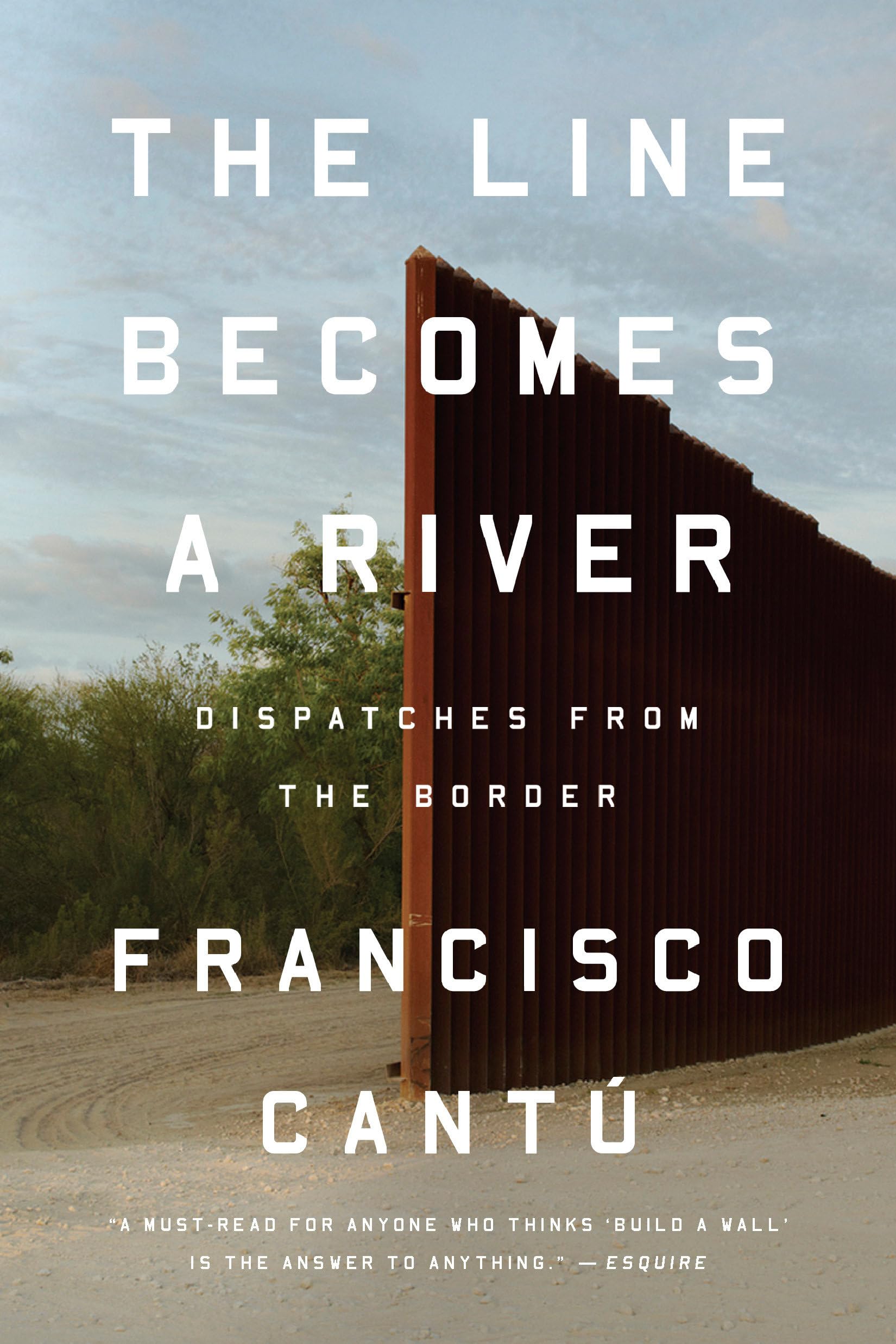
The Line Becomes a River is a 288-page paperback by Francisco Cantú, a former US border patrol agent, offering poetic and deeply personal dispatches from the US-Mexico border. Combining environmental detail with raw human stories, this critically acclaimed book (4.6/5 stars) provides a unique insider’s perspective on immigration, making it essential reading for socially conscious professionals and book clubs.
| Customer reviews | 4.6 4.6 out of 5 stars (663) |
| Dimensions | 13.72 x 2.03 x 20.83 cm |
| Edition | Reprint |
| ISBN-10 | 0735217734 |
| ISBN-13 | 978-0735217737 |
| Item weight | 240 g |
| Language | English |
| Print length | 288 pages |
| Publication date | 5 February 2019 |
| Publisher | Riverhead Books |
K**E
This book is beautifully written and gives the reader more context and understanding for the issues on the US border with Mexico from the viewpoint of a Latino border patrol agent. Francisco Cantú tells the story of his time working on the border and the history of it in such a deeply personal and poetic way it makes the book more than a political exploration of a current issue and turns it almost into poetry.
M**S
Dieses Buch wurde von unserem "Führer" in einem Buchclub vorgeschlagen. Die Mutter des Autors, eine Rangerin des US-Nationalparks, war ein herausragender Charakter. Sie unterrichtete ihren Sohn über Geographie, Wetter, Tiere und Pflanzen in der Gegend um den Rio Grande an der US-Grenze neben Mexiko. Diese Beschreibungen sind wunderbar. Auf der anderen Seite gibt es in dieser Gegend verzweifelt arme Menschen, Drogenschmuggler, die Intimadation und Gewalt anwenden. Obwohl ich die illegale Einwanderung nicht für gut halte, habe ich das Gefühl, endlich die Geschichte der illegalen Einwanderung zu verstehen. This book was suggested by our "leader" at a book club. The author's mother, a US National Park ranger, was an outstanding character. She taught her son about the geography, weather, animals & plants of the area around the Rio Grande River on the US border next to Mexico. These descriptions are wonderful. On the other hand, this area has desperately poor people, drug smugglers who use intimadation & violence. While I do not think illegal immigration is good, I feel I finally understand the illegal immigrant's story.
V**S
It is a touching compilation of anecdotes and experiences from the author. It is more of a diary than a policy paper, quite enjoyable if I might say.
G**H
A searing & important book. Everyone should at least read the last 50-odd pages - especially politicians. A reminder of the human cost of what can often seem abstract immigration policies. Though of course it’s about the US/Mexico border, its lessons apply equally here given how inhumane many British immigration policies are - and if Brexit goes ahead they’ll probably get worse.
E**Y
As a strongly conservative person, I was ready to delve into this book anticipating a strong liberal bias that would label me a bigot. I was ready to feel outraged as yet another person would, in print no less, tell me how I just don’t understand what is going on with regards to the immigration issue. While I know that I can’t fully understand Jose’s plight, I can surely empathize and sympathize with him and for him. It was a relief to me to be surprised by Francisco Cantu’s book. I lived in the Rio Grande Valley for 47 years and have seen firsthand the complexities involved in this issue. My brother was killed when a group of Mexican teenagers and their polleros were evading the police. The car they were in T-boned my brothers car at an intersection and cut him in two. A very good friend of mine, Hispanic as well, is a Border patrol agent. He qualified himself to work on the Rio Grande River in boats, on ATV out in the field and has also worked at the US Border Patrol sector headquarters. We spoke often, way before this book, about the things he has seen and done throughout his years as a CBP agent. How they are always being watched by lookouts from the south side of the river as they patrol the US side. He described the smell of decomposing bodies left behind in the brush land, or finding people under the full effect of heat stroke. He has told me about the taunts they receive as the polleros just escape back across the river. Cantu’s book reminded me a lot of my friend’s recollections. It also help me understand a little more of why he won’t speak too much about his feelings. I sense he is empathetic towards those he has stopped and believe he has genuine sympathy for them, but he also insists that what he is doing needs to be continued. He feels that even if stopping 1000 crossers only yields a few really dangerous people, he has improved life for His family on the US side. Living in Dallas for 3 1/2 years now, I have seen how much of it is being built by undocumented people. I know people, who like Jose stay under the radar by working and going home, day after day, and strive to live in peace. Some of them submitting themselves to unjust treatment because it is a better alternative than going back to their home country. I have been surprised at this treatment because it comes, many times, at the hands of Latinos who are fortunate enough to have legal status. This issue is very complex, and it angers me when people and politicians distill it down to platitudes. This has been done for far too long by people on every side of the argument. Usually, it has been done for personal gain and without any real knowledge of what it is like to live in an area affected by this, or any real knowledge of the people living through this. Thank you Mr. Cantu for writing this book, I wept through many sections and it has given me some resolve to help where I can. If anyone has strong feelings on either side of the immigration and citizenship problems of the US, I urge you to add this book to your references on the subject.
Trustpilot
3 weeks ago
1 week ago