We remain fully operational. Our teams are working around the clock to ensure your deliveries continue safely.

DOWNLOAD THE APP


Customer Services
Copyright © 2025 Desertcart Holdings Limited
DOWNLOAD THE APP

⚡ Master your electrical domain with pinpoint precision!
The Extech CB10 is a professional-grade AC circuit breaker finder and receptacle tester designed for both home and industrial use. Featuring two-pass calibration technology, manual sensitivity adjustment, and an integrated GFCI tester, it enables fast, accurate breaker identification and comprehensive outlet safety diagnostics. Ready to use with included 9V battery, this compact tool streamlines electrical troubleshooting and labeling with reliable LED indicators and audible alerts.


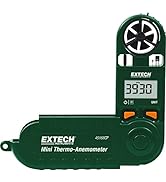


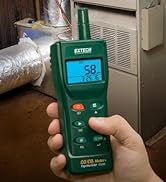


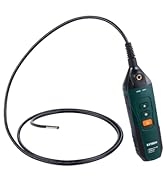
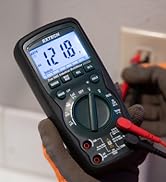


| ASIN | B0014FNWJG |
| Batteries | 1 9V batteries required. (included) |
| Best Sellers Rank | #161,931 in Tools & Home Improvement ( See Top 100 in Tools & Home Improvement ) #239 in Circuit Testers |
| Brand | Extech |
| Color | Green, Red |
| Date First Available | September 1, 2004 |
| Global Trade Identification Number | 00793950400104 |
| Is Discontinued By Manufacturer | No |
| Item Weight | 0.704 ounces |
| Item dimensions L x W x H | 10.1 x 5.4 x 1.5 inches |
| Item model number | 1218G94EA |
| Manufacturer | Extech |
| Measurement Type | Voltmeter (for AC voltage) |
| Min. Operating Voltage | 110 Volts (AC) |
| Power Source | Battery Powered |
| Product Dimensions | 10.1 x 5.4 x 1.5 inches |
| Style | CB10 |
| UPC | 785533703542 793950400104 |
D**D
Works through walls too
I just bought this to use in my older house and it has worked great for finding the breakers and even wires in the wall! I find for the walls it can be a little hard to trace as I feel like the wires have to be within 1-1.5" deep with the sensitivity maxed out and you can loose the signal being as little as 1/4" off from the trail, but it totally works and let me trace a few wonky paths so I could figure out exactly where the wire was moving in my walls and even to a buried junction box. I also really like the manual adjustment since it lets me hone in the breaker real quick and I don't have to scan the breaker like you see with the auto-adjusting ones. I just go to the breaker on about "half" sensitivity, move fast, and when I hear the beep I just drop it to lowest immediately and find it every time. Also due to the manual aspect of it, it let me figure out that a circuit was being served by 2 breakers and tracing which wire went where within the 14/3 wire sleeve itself since I could turn the sensitivity down so low. The socket tester works well too from the few tries. Only real issue I noticed is if you have any of the circuit based dimmers that basically everyone uses now since LED lights need them for dimming, it'll also send a signal in the line that this can pick up. It's real obvious though as it beeps much faster and sounds funny compared to how the device normally works, so either just ignore it and follow the normal beeps or turn off the light, surge protector, etc. Great device and wish I had one sooner to figure out all this weird wiring and no constant breaker switching either!
S**N
Works well and reliable
Very effective tool, I use it on almost every repair call. It made me look like a pro when I labeled all the sub panels for a commercial warehousing customer of mine who berths hundreds of food trucks boats and RV's. When they need to know where a breaker is in one of their 9 panels they can find it because they are all labeled now at the receptacles. It works for two and three leg circuits without neutral legs better than I thought it would. I used alligator clip jumper wires and pins to connect the plug to the various twist lock and range receptacles that the food trucks plug into for the night. It is a little hazardous to have open hot wires using alligator clips, but it works safely and well well with a little caution and a vigilant helper. I am very happy. I have also used it to locate GFI feeds and test GFCI receptacles. It is a good tool and a great price. It is not a hard core unit in the long run, but it is not crummy cheap either. I am a professional repair contractor and although I am not destructively hard, am very hard on my gear in normal use, electrical work is a rough discipline. I drop things a lot, and I use it up, burn it out, and play it as productive as possible. I have no problem with the fact that a saws-all lasts me about a year during rough in work. The tool makes its money several times over. The plug-in on the breaker locator broke when I was testing a GFCI. The ground prong came out of the plastic body. The prongs are good thick stainless steel but it needs a larger chamfer ring to hold it into the plastic, at least the ground prong anyways. I absent minded threw both the plug and receiver away immediately on the job site with some other debris and wire clippings. I looked closely at the body of the plug and hastily decided not to try to open it and fix it. I figured I would just buy another one. Now I wish I had saved it and looked closer later. I have a entry level quality toner kit also and love it. I have dropped it twice and opened it and fixed the antenna cartridge and the speaker twice. I can not see the point in spending over 100 bucks on instruments that are gonna get beat up, or stolen anyways. This is an excellent tool whether you are a home-owner or a professional. The seller gets it out quick and with good packaging. If I am more careful with the plug I am sure it will not break again.
L**G
Works very well, but you have to fiddle with it a little to get it dialed in.
I had no idea this kind of product existed until I was having trouble tracing circuits in my house. The house is midcentury, so not crazy old, but it has had some interesting wiring work done over the years. During those years nobody has apparently taken the time to accurately label the breaker boxes downstairs, so you can never tell what circuit anything is on. Normally this is frustrating, but not the end of the world, but recently was a much bigger problem. I got a MIG welder that I can use for hobby stuff, but it has to be on a 20AMP circuit instead of 15AMP. Normally this wouldn't be an issue, just double check it is on a 20AMP circuit and that the outlet is also rated 20AMP, but of course I couldn't tell which outlet was on which circuit. I didn't want to have to guess or start flipping breakers to see what turns off, so I looked online. I was originally just hoping for a test plug that could give me some sort of further information. I already have the ones that just tell you if the outlet is wired correctly. I was SO pumped when I found out this thing existed and wasn't crazy expensive. I couldn't wait for it to get here. I tried it out and I was able to quickly make sure the outlets, including GFI, were wired correctly (because the plug section also performs this function) and which circuit they were on. It saved so much time and messing around and gives me a great option for future situations that are similar. I have even already lent it to a couple of friends who didn't know this technology existed and were also very excited to make use of it. Using the tester can be a little delicate, but I did look at some other reviews that were helpful. Basically you start by plugging in the dongle to the outlet you want to find the breaker for, then you start sliding the handle along with the tip making contact along the center of each circuit breaker. Then you keep turning down the sensitivity until it only beeps on one breaker switch and that is the loop that the plug is attached to. When it gets the test signal from the plug, the handle frantically but rhythmically beeps. It takes a few tries to recognize it, but it is a distinct sound. The sensitivity adjustment has to happen every time you use it, as far as I can tell, but after the first time it is much easier because you know what to listen for.
H**N
الجهاز جيد ويفحص لكن ليس بالشكل الدقيق اذا كنت فني متخصص يمشي معك ولكن لشخص عادي قد يكون عليه صعب
E**R
Testei e recomendo
M**O
あと、3p⇨2pへんかんがついていればと思いました。使い勝手は良いです
L**A
Es de menor calidad que los de estados unidos pero aún así es una excelente herramienta
G**S
Purchased kit for personal use works well for home use would stepping up to another kit if using it for work. Dislike to handheld voltage testor with the light, it has no sound just the light when it detects voltage. I have similar models with sound and lights I find them better
Trustpilot
2 months ago
3 weeks ago