

Desert Online General Trading LLC
Dubai, United Arab Emirates
Desert Online General Trading LLC
Dubai, United Arab Emirates
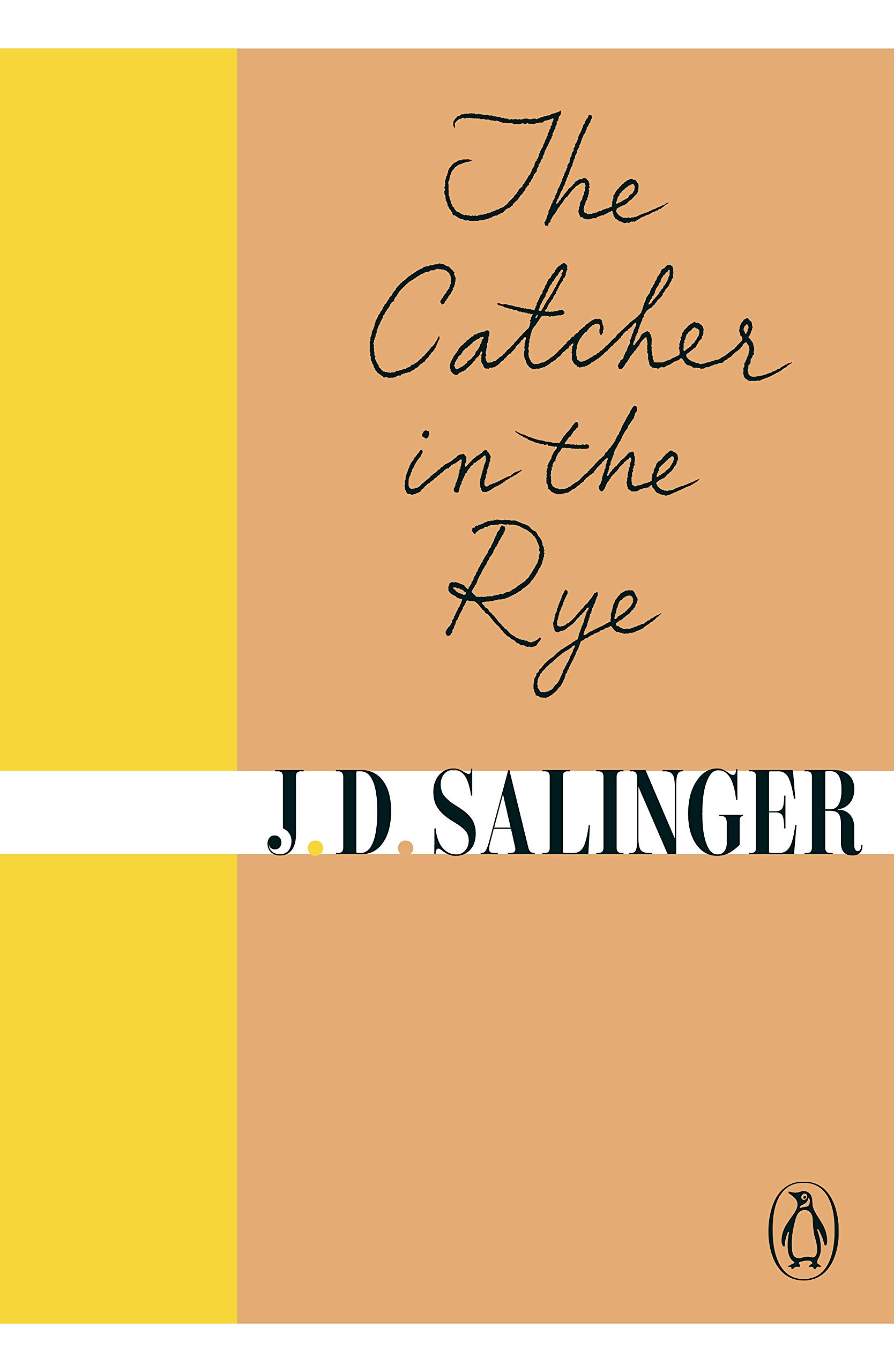
The Catcher in the Rye
G**H
Excellent; must read for modern youth.
I bought this book after several recommendations from friends. Beforehand I read up about the novel(with the power of google and wikipedia)and I discovered that the novel has been the issue of controversy and censorship. I instantly tore the brown delivery packaging and tossed it in the bin. The books opening lines, in particular, "...all that David Copperfield crap. but I don't feel like going into it.." conveyed this book was different. Indeed as I read on it portrayed the traits of adolescent rebellion: smoking, drinking, sex, lack of respect for authority... I'm 16, and thus relate to the protagonists struggle. I recommend this book to anyone of my age, its strange how a book my grandfather would have read relates so much to society today. In the midst of university choices and the transition into adulthood, I feel sympathetic with Holden's struggle to move on from childhood and immerse into the world of adults. His inability to "get sexy" with a girl perhaps suggests his wish to hold on to the last strand of his childhood, his virginity. The adult world is everything Holden loathes, in particular the corruption of "childhood innocence". His dream of being a, "a catcher on the rye", catching kids from falling off a cliff, or falling into adulthood supports this statement. Again, this reflects modern adolescence, the struggle of identity and confusion into the transfer of adulthood is still as relevant then as it is now, believe me. The book also conveys how those who refuse to accept the rules of society are removed. Holden is the creative sort, and thus detests the strict rules of education. His anger at the, "digression business" conveys this. He is furious when a fellow classmate is incriminated for expanding on his topic; breaking the rules to convey creativity. Holdens repeated expulsions show his ambition to break the rules and be different. But those who break the rules are punished, again and again; and if they don't learn from such mistakes, they are eventually imprisoned or hospitalised(as Holden is).I don't really know were I was getting with that point. "The Catcher On The Rye" however is an excellent book, I especially recommend it for someone of my age group. However a basic interest in literature is probably necessary, if your son is pissed because you got him this book instead of, "GTA 5", don't blame me. Overall I conclude that this book satirises youth sub-culture excellently, and whether it has a deeper meaning reflecting the institutes of society is a matter to the reader, in my personal opinion it does. We each will reflect upon this novel differently and that is the beauty of personality.
A**N
Warm and relatable
A pleasant and often amusing read. At times a little hard work perhaps but on the whole I enjoyed it and would recommend this coming of age story.
S**E
Why Some Books don't Die
Some Books don't DieThe Catcher in the Rye by J. D. Salinger, which has continued to sell about a million copies every year since it was first published in 1951, is one of those books that won't die. The title was taken from a line in one of Robert Burns's poems and symbolised the writer's wish to save little children coming through the rye from falling over the cliff and losing their innocence. There have been thousands of reviews of this book but the curious thing is, they are all either full of praise or severe condemnation, with little in between. This suggests a fundamental 'mind-body' dilemma in the way it's been interpreted. Although it's now a subject under serious investigation by neuroscientists, the eighteenth-century philosopher, David Hume, identified it as: the difference betwixt impressions, which first appear in our minds and ideas which make their way into our thoughts. It's also a problem that divides the mind of a child, who 'knows' without needing to 'understand', from that of an adult, who needs to 'understand' before 'knowing'. Some say this distinction disappears when the immature mind reaches maturity, but others might ask: which one is which? It was, however, a division that occurred much earlier in our evolutionary history, when common standards of empathy gradually became monopolised by authorised standards of conformity. At one level the book is a first-person singular account of an anti-establishment teenager, Holden Caulfield, who has just been expelled for failing his school exams, so spends four days bumming about in New York, before returning home to face the wrath of his parents. At a more profound level however, it's his own, somewhat rambling, self-counselling enquiry into his inability to communicate with others, and there are hints that he too might be one of those children falling over the cliff and losing his innocence. In fact, it is suggested throughout the text, that we are all wandering aimlessly through the rye, unable to see where we're going or what we're doing until after we'd done it. In conversation with one of his school mates, for example, he suggests even Jesus couldn't have known what he was doing because he: 'picked his disciples at random and didn't have time to go round analysing everybody', but that didn't convince his schoolmate who told him that his trouble was: 'he didn't go to church or anything'. In other words, he hadn't been sufficiently conditioned to realise how wrong he was. It's evident from the start, however, that Holden's home-life hasn't been easy. He remembered his parents having terrific fights in the bathroom and that communication with them was strained. He tells the reader: 'they'd have about two haemorrhages a piece if I told them anything personal about themselves'. We learn, furthermore, that his older brother had been traumatised from serving four years in the army. When he came home all he did was lie on his bed, saying he wouldn't have known which direction to shoot in, because 'there were practically as many bastards in the army as there were Nazis'. And when their younger brother died of leukaemia, Holden smashed all the garage windows, so his parents considered sending him to some 'goddam military school'. He admitted he’d been 'pretty run down' by, what he called, 'this madman stuff', but was sent away to 'take it easy' for a while instead. He remembered 'this psychoanalyst guy kept asking him if he was going to apply himself when he went back to school', but he thought it a stupid question because 'how could anyone know what they're going to do until they've done it? The answer is they don't!' His farewell meeting with his history teacher, 'old Spencer', as paraphrased below, illustrates his problem:'Caulfield? Come in ... have a seat there boy … so you're leaving us, eh'. He started going through his nodding routine: 'I understand you had quite a little chat with Dr. Thurmer [the headmaster]. What did he say to you?''Oh … well about life being a game and all, and how you should play it according to the rules …'.'Life is a game, boy, a game one plays according to the rules … I flunked you in history because you knew absolutely nothing ... I doubt very much if you opened your text book even once the whole term ... Did you? Tell the truth, boy!''Well, I sort of glanced through it a couple of times' I said because I didn't want to hurt his feelings. He was mad about history.'You glanced through it, eh?' he said, very sarcastically. 'Do you feel absolutely no concern for your future, boy?''Oh yes, I feel some concern ... sure, I do.' I thought about it for a minute .... but not too much, I guess.'I'd like to put some sense into that head of yours, boy. I'm trying to help you ... '.'I know you are sir', I said. 'Thanks a lot. No kidding. I appreciate it. I really do'I felt sorry as hell for him but, all of a sudden, I just couldn't hang around there any longer. Holden's attitude to learning, compared to old Spencer's, reveals a basic incompatibility between those who rely more on their feelings about how to cope in an ever-changing world, and those who rely on authority's rule-book to help them comply with a more ordered one. Alas, however, as we shall see, never the twain shall meet, since all those impressions, which first appeared in our mind have, somehow along the way become influenced by all all those ideas which made their way into our thoughts. Wherever Holden went, he found himself involved with, what he called phony people: 'old Sally for example, the queen of the phonies, would start drooling all over the place when he told her he had tickets for a show that was supposed to be very sophisticated. You never saw so many phonies ... all talking about the play so everybody could hear how sharp they were'. His basic feeling, that all the world's a stage, was especially relevant to the movies at that time, when Hollywood was all glitz and glamour, and full of 'lean-jaw guys'. Meanwhile, at Christmas he remembered a 'whole bunch of people, thousands of them, singing Come all you Faithful! … Big deal! And all the ministers had these Holy Joe voices when they started giving their sermons'. He even felt his own schoolmates were phonies, 'all learning how to be smart enough to buy goddam Cadillacs someday'. We might find these outbursts of an angry teenager amusing, but if we ask ourselves why, Holden tells us they're all playing games. 'Some game!' he says, 'if you get on the side where all the hot-shots are, then it's a game all right. I'll admit that. But if you get on the other side, where there aren't any hot-shots, then what's the game about: nothing!' He compares it to that silent world, displayed in glass cases at the Natural History Museum he frequents, showing Indians in canoes or making fires and weaving blankets, or Eskimos sitting over holes in the ice, fishing. He keeps wishing things had stayed the same and thinking how different they were from the phony world he was experiencing all about him in the 'now'. His criticisms, however, are not confined to the behaviour of others; he is equally critical of his own behaviour and often refers to himself as a moron. His observations, not only of others wandering blindly through the rye, are also of himself immersed in it. These intuitions about the way our objective thoughts unwittingly take control of our subjective feelings become increasingly evident throughout the text but are more bluntly stated when he returns home one night, while his parents are out partying, and sneaks into his much loved little sister's bedroom for a chat. On waking, she says: 'Holden … how come you didn't come home Wednesday? … You didn't get kicked out of school or anything, did you? … Daddy's gonna kill you'. But then, when she asks why he couldn't become a scientist or a lawyer one day, like Daddy, he realises she too is losing her childlike innocence and replies: 'Those people are all right I guess, when they go about saving innocent guys' lives and all. But you don't do that kind of stuff if you're a lawyer. All you do is make lots of dough and play golf or bridge, and buy cars, and drink Martinis. And even if you did save guys lives, how would you know if you did it because you really wanted to, or because you just wanted to be a terrific lawyer with everybody slapping you on the back, and congratulating you in court when the goddam trial's over? How would you know you weren't being a phony? The trouble is, you wouldn't!' Towards the end of the book, he visits one of his more enlightened former English teachers, who tells him he's 'not the first person to be confused or frightened by human behaviour … The whole arrangement's designed for men, who at some time or other in their lives are looking for something their own environment can't supply them with'. Then, rather optimistically, suggests Holden might learn from them, just as they might learn from him. He says: 'it's a beautiful reciprocal arrangement’ but admits: 'it not education'! The feeling that something had gone seriously wrong with society and needed its sense of security restored, must have been conceived in the wake of two World Wars, and, on the face of it, promoting the God of Consumerism seemed to fit the bill. It was our ego's myopic belief that it possessed the 'divine right of kings' to tell everyone, by means of mass mind-bending adverts, they needed 'the good life', and it certainly convinced the majority. This focus on a more acquisitive society, at the expense of a more emotionally spiritual one however, had unforeseen consequences and 'The Catcher in the Rye' helped to expose some of them. The Beat Generation that followed encouraged quotes from poets like William Burrows, for example: 'Only those who can leave behind everything they have ever believed in can hope to escape, or Jack Kerouac: The best teacher is experience and not through someone else's point of view, or, Dorothy Parker: 'If you want to know what God thinks of money, just look at the people he give it to'. Such anti-establishment ideas must have encouraged the 'black power', 'flower-power' and 'ban the bomb' movements, yet a growing belief that materialism would conquer not only the Earth but Space too, has continued to this day. Although we can sling-shot rockets round Jupiter to reach Saturn, for example, we tend to overlook the fact that we could only have done so after a long and tortured history of trial-and-error elimination, almost certainly involving far more failures than successes. It's the same neurological process by which our ancient ancestors learnt to sling-shot spears at wild animals; in other words, by repeated trial-and-error guesswork, or as Holden would say, by random. Perhaps the ego's self-congratulatory bias in favour of remembering its successes while conveniently overlooking its failures, is a consequence of the rational mind's belief that it knows without having to feel any more. At least the environmental activist and poet, Gary Snyder realised we were putting the cart before the horse, by suggesting we: exterminate all rational thoughts. Although 'reason' has made us think we are the profit-masters of our 'progress', global warming, together with the depletion and pollution of all natural resources might force us to eventually think otherwise. As George Bernard Shaw realised, there's another interpretation of the word 'progress': 'The reasonable man adapts himself to the world; the unreasonable one persists in trying to adapt the world to himself; therefore, all progress depends on unreasonable men.' J. D. Salinger was far-sighted enough to see this, in saying: the world is full of actors, all pretending to be humans. In fact, his book must have been largely autobiographical because, like Holden, he simply couldn't be 'educated' in any conventional sense of the word and, like Holden's brother, was traumatised by his military experiences. Although he was lucky enough to know where society was leading us, he was unlucky enough to feel the consequences of knowing, so in 1953 felt compelled to escape his old stamping ground in New York and spend the rest of his days living out a more reclusive life in rural New Hampshire, far from all the publicity his book had generated. Some may feel they know, without needing to understand why The Catcher in the Rye deserves 'great praise', while others may think they understand, without needing to know why it deserves 'severe condemnation', so the body-mind dilemma, which has become an inescapable part of the human condition, is why this book will not die.
A**Y
Can't make my mind up............
I couldn't work out how I had reached the age of 60 without ever having read this book. So I decided I would give it a try.I must confess that it has left me with mixed feelings. Lot's of reviewers seems to suggest that the book is Marmite; that the reader will either love it or hate it. I'm afraid I have to break that mould. Do I love it - no, do I hate it - no. It's not a book I 'enjoyed' reading and at times it felt like a bit of hard work but it has left its mark on me and the more I reflect upon it, the more I recognise some of the subtle layers that exist within it. I may not have loved it, but I will remember it!Firstly the contemporary British reader needs to get past the language and context of 1940's New Yorkers. Once you ease past that, you will find yourself seeing the world almost directly through the eyes and mind of a somewhat disordered 16 year old boy as he confronts the latest in a series of setbacks in his young life. There is virtually no filter to the way in which he explains his view of the world and his dislike of (almost) everyone in it. He is simultaneously caustic and antagonistic, yet self-deprecating and vulnerable. Ultimately he is as ill-equipped to deal with the world as the world is to deal with him.I do recommend the book, but don't expect an exciting plot or lots of page-turning action. It's a different proposition altogether.
C**R
Muito bom
O produto fala por si e o atendimento foi rápido com entrega dentro do esperado
M**N
Klassiker...MR Chapman...
Bra kvalitet på boken, alltså själva trycket.
B**Z
Entrañable
Libro que engancha desde el principio. Narra en primera persona unos días de la historia de un adolescente. Sus dudas, miedos, sus inseguridades. Entrañable.
V**E
The Catcher in the Rye
It's as advertised. I have also attached pictures of how the book looks without the cover for those interested.
G**S
Encuadernado delicado. Historia introspectiva
El envío fue oportuno como siempre. En cuánto al producto, debo decir que la edición es un poco más austera de lo que imaginé: la pasta es blanda (evidentemente) pero no está plastificada, por lo que está más expuesta a la suciedad. En cuanto al contenido del libro... Si estás considerando comprarlo es porque tienes una idea de lo que puedes esperar del libro. Y no, no parece haber nada oculto o místico en la novela que te pueda convertir en asesino --sí, esos rumores existen y no me los estoy inventando-- sino una historia introspectiva y nostálgica que a ratos te pondrá la piel de gallina o te hará esbozar una sonrisa de complicidad.
Trustpilot
4 days ago
1 month ago