We remain fully operational. Our teams are working around the clock to ensure your deliveries continue safely.

DOWNLOAD THE APP


Customer Services
Copyright © 2025 Desertcart Holdings Limited
DOWNLOAD THE APP
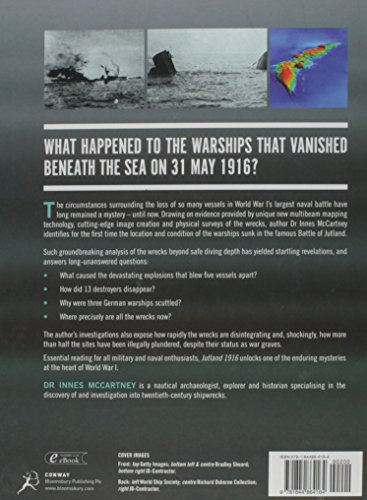
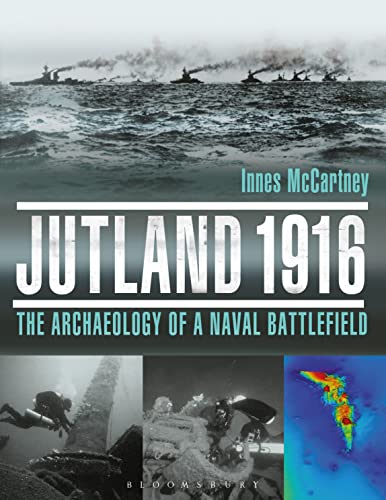
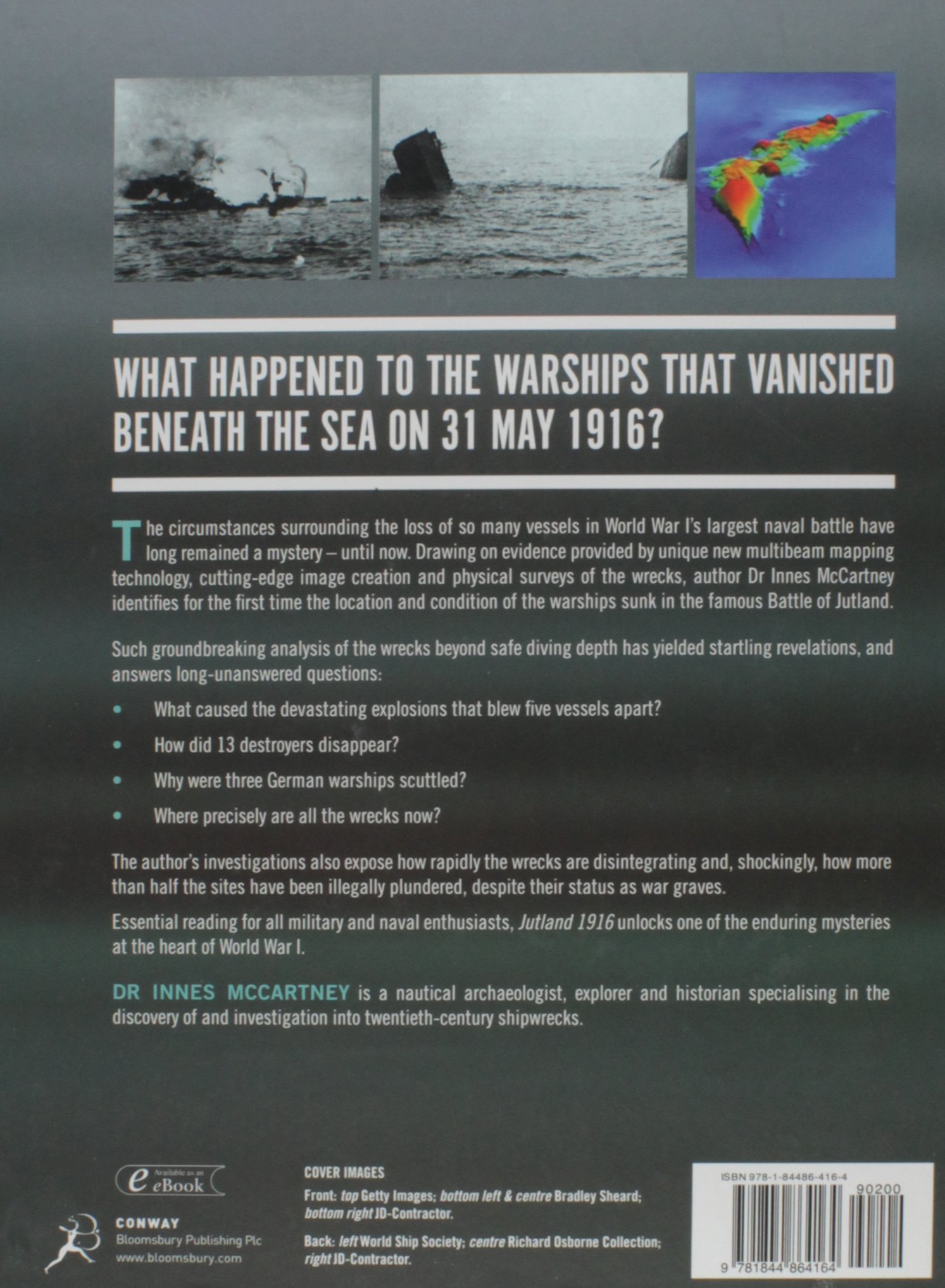
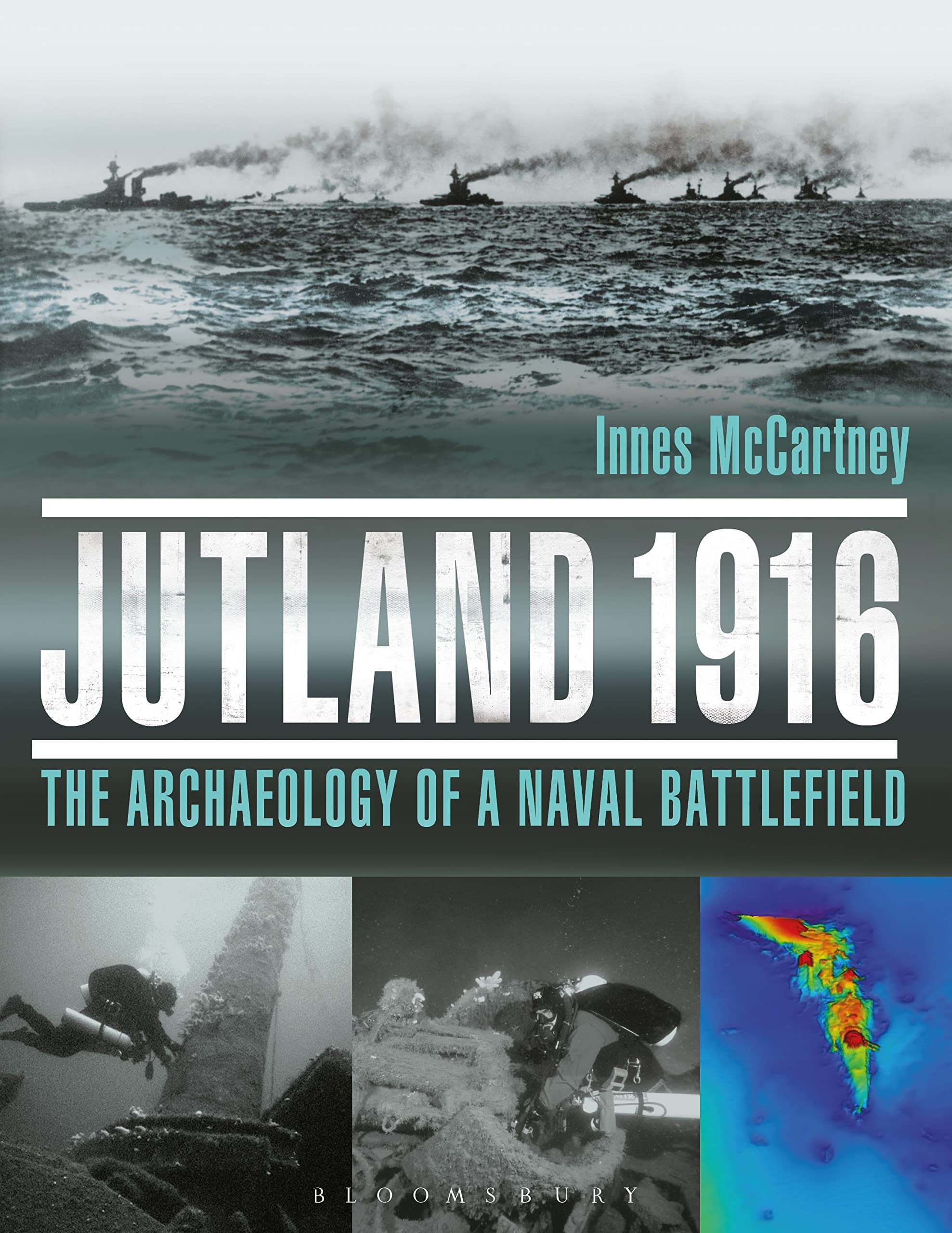
Jutland 1916: The Archaeology of a Naval Battlefield [McCartney, Innes] on desertcart.com. *FREE* shipping on qualifying offers. Jutland 1916: The Archaeology of a Naval Battlefield Review: A Great Edition To Any Historical Library - This is a great read for anyone interested in either the Battle of Jutland, dreadnoughts, or shipwrecks in general. The author does a great job explaining the ships, their actions, their loss, and their condition at the time of the book. The pictures are helpful and informative. One can easily be swept along on this journey through history and sense the author’s wonder at these mighty ships. Review: Jutland 1916 - Well written and well researched. An after the battle book that answers many questions.
| Best Sellers Rank | #1,636,967 in Books ( See Top 100 in Books ) #2,264 in Archaeology (Books) #2,377 in Naval Military History |
| Customer Reviews | 4.6 4.6 out of 5 stars (121) |
| Dimensions | 1 x 7.3 x 9.8 inches |
| ISBN-10 | 1844864162 |
| ISBN-13 | 978-1844864164 |
| Item Weight | 2.26 pounds |
| Language | English |
| Part of series | General Military |
| Print length | 272 pages |
| Publication date | March 14, 2017 |
| Publisher | Conway |
P**7
A Great Edition To Any Historical Library
This is a great read for anyone interested in either the Battle of Jutland, dreadnoughts, or shipwrecks in general. The author does a great job explaining the ships, their actions, their loss, and their condition at the time of the book. The pictures are helpful and informative. One can easily be swept along on this journey through history and sense the author’s wonder at these mighty ships.
J**E
Jutland 1916
Well written and well researched. An after the battle book that answers many questions.
D**R
A new understanding of Jutland
Although a library of books seems to have been written on Jutland, this appears to be the first serious one to focus mainly on the condition and exploration of the wrecks. The author is a marine archaeologist who's spent the last 15 years locating and studying the wrecks of 23 of the 25* ships sunk during the battle. Although "Jutland 1916" won't force people to totally reconsider their preconceived notions about the battle in the same way that "Shattered Sword" did with Midway, it nonetheless adds some interesting new wrinkles to the Jutland story. The book is divided into three sections, covering the battlecruiser, fleet, and night actions. Each of the major (light cruiser and larger) ships receives a chapter of its own. Each describes the general history of the ship and the role it played in the battle, eyewitness and photographic records of its loss, and a study of the condition of the wreck. The destroyers are covered in a separate chapter at the end of each section, which are similar in format to the major warship chapters, but obviously not quite as detailed. The highlight of this book are the sections focusing on the condition of the wrecks themselves. Along with many ROV and free-dive photographs, there are multibeam sonar scans of each wreck site, showing details as small as one meter across. Considering the horrible underwater visibility in the North Sea, these images frequently provide revelatory details. We finally get a good idea of the devastation wrought by a magazine explosion (almost nothing of "Queen Mary" exists forward of Q turret), the effect of 100 years on the bottom upon lightly-built destroyer hulls, and the extent of the illegal salvage carried out on many of the wrecks. Unfortunately, this book suffers from occasional moments of stylistic excess. Some of the pages have maps or photographs splashed across the background, which can be distracting. The pages featuring ROV images are printed on glossy black paper, which *looks* nice, but is an absolute fingerprint magnet. Considering Dr. McCartney's maritime historian credentials, I'm kind of surprised at how much landlubber terminology snuck into here. Barbettes become "armoured turret sleeves," a boiler's water drum becomes a "water trough," a scupper becomes a "drain," and so on. No doubt only us hardcore naval history geeks will notice (or care) about this, but they stuck out to me. Although it does have some minor issues, "Jutland 1916" is a pretty enjoyable work on the whole. The author assumes the reader has a better than average understanding of the battle going in, and I'd recommend studying a good set of maps first. Based on the evidence here, it would seem that a "do or die" point is approaching for the Jutland wrecks. Should they be protected as war graves, and what can be done to prevent illegal salvaging? What artifacts should be preserved before they completely disappear? Innes McCartney doesn't provide easy answers to these questions, but he does do an excellent job raising them. *The wrecks of the Sparrowhawk and V4 had not been located when this book was published in the UK in May 2016.
A**R
Very good underwater archeology book!
Exactly what I hoped it would be, and delivered rather quickly.
W**E
if you're interested in Jutland, this book is essential
This is not for the person who is casually interested in the events of Jutland. But, if you are highly interested in what happened, you will get a lot out of this book. it is well written, but McCartney does assume his audience knows the basics of the battle. Clearly this is someone who knows their topic, and readers will learn a lot. There are pictures of the wrecks, including full hull sonar scans. McCartney reviews how each ship sunk and the likely reasons why. He spends little time debating the strategic choices of the commanders, but that is not the story he's telling. However, McCartney does tell the basic story of the battle, and as well as I have seen it done. 5 stars for sure.
B**.
Fascinating! Great color multi-beam sonar images, analyses of causes of sinking, maps of wrecks.
This is a fascinating book! It describes the submerged wrecks of 11 major sunken British and German warships (battlecruisers, light cruisers, armored cruisers, and one pre-dreadnought battleship) and also seven destroyers. The color multi-beam sonar images are intriguing even to an amateur like me. There are many underwater color photos taken by the mini-submersible Remotely Operated Vehicle (ROV). The location of each wreck is also identified on a map of the battle area. The text discusses the significance of the wrecks’ components such as boilers, turbines, shafts and propellers, gun turrets, and pieces of armor plate. Analyses of the likely causes of the ships’ sinking are discussed based on the archeological evidence. The book also reproduces the maps and charts from the 1919 “Harper Record” commissioned by the Royal Navy after the war. These charts show the locations of the major wrecks as they were thought to be back in 1919. The true location of only one wreck, that of the British battlecruiser “Invincible,” was known at the time because divers had found it. The locations of the other sunken ships was based on a review of nearby surviving ships’ logs. The navigational accuracy of those logs was based on calculated positions; there were no satellite navigation and radar systems back then. The true locations of the wrecks, based on the dives described in this book, are superimposed on the charts. The “Harper Record” locations are in error by an average of 3.5. nautical miles (almost 6 kilometers). This, in turn, likely means that all the maps of the locations of the Jutland actions and the associated ship tracks depicted in books on the Battle of Jutland are slightly wrong. My only criticism is that the reproductions of the 1919 “Harper” charts are very difficult to read. They typically make up 1/3 to 1/2 of a page. The lettering is very tiny and the ships’ tracks are hard to identify. It would have been much better if they had been expanded to a full page.
C**R
An Excellent Book
This is an excellent book covering a subject that to my knowledge, no one has ever covered before. If you already have a book on the Battle Of Jutland, then this is the perfect companion to it.
A**D
This book stands out among the serried ranks of books released to coincide with the Jutland centenary in actually providing new 'hard' data, rather than recycling and/or reinterpreting long-known 'facts'. In the fog of battle, and in the wake of some devastating destructions, the precise fate of a number of ships remained obscure to a greater or lesser degree, with their wrecks the only potential source of elucidation. A number have been located and dived over the years, but it has only been the most recent years that developments in sonar and other underwater remote technology has allowed whole wrecks to be surveyed in a meaningful way - rather than brief glimpses of discrete elements or low-resolution sonar images - or located at all. These innovations have been harnessed to mesh with the author's long-term research into the wrecks, including numerous dives on them, to produce what is (nearly) a definitive account of the archaeology of the battle. The approach is systematic, with an introduction dealing with principles and techniques followed by a chronological account of the battles, seen though the prism of the losses and wrecks. Each ship has her earlier history summarised, the previously-known information on the sinking recounted and eyewitness accounts reproduced and critiqued. The same is done for photographic evidence, the authenticity of a number of well-known images allegedly depicting a given sinking being called into serious question. Finally, the wreck itself is described and illustrated, both with photographs taken by divers and remote-operated-vehicles (essentially mini-submarines) and by the results of multi-beam sonar surveys. The latter represent a quantum leap beyond anything produced before, and produce 'real' representations of the complete wrecks. The archaeological evidence of the wrecks is then combined with the other sources to suggest a most likely narrative for the ships' last moments. In doing so, there are numerous points where previous conclusions are corrected, some deriving from the fact that a wreck is not actually where it was formerly thought to be (or where it was thought that the ship sank), others where the examination of the wreck has indicated that the mode of destruction was not quite as perceived by eyewitnesses. For example, HMS Defence was described as being blown to pieces by magazine explosions yet, although indeed sunk by such explosions that severed the bow and stern, the ship is remarkably intact, allowing the way in which 'flash' from propellant fires passed along the ship's ammunition beam ammunition passages to detonate both fore and aft magazines to be clearly seen. Light is shed on the tragic end of HMS Black Prince - she blundered into the German High Seas Fleet at night and came under the fire of a whole squadron of German battleships, sinking with all hands - with her actual sinking now shown to caused by the explosion of her aft magazine, yet with evidence that she may have fired a torpedo at her assailants in her death throes. These are but a few highlights of what is a must-have for anyone interested in the battle and/or the warships of the First World War. The above qualification of the book's definitive status is simply because since it went to press the author has acquired further data to fill in a few of the remaining gaps in the story. It is to be hoped that this data (which Dr McCartney has already presented in public lectures) can be fitted into the reprint that one suspects will be called for very soon. The only criticism that one might level at the book is that it could be seen as a tad 'over-designed', with (e.g.) different coloured pages, gratuitous watermarks and placing captions on relatively dark panels that make them difficult to read. These issues aside, which are of course not the fault of the author, this book is to be unreservedly recommended as one of those few volumes that genuinely makes a difference, and shows how archaeology can be just as important in writing modern history as it is in doing this for the remote past.
A**R
McCartney has written a top class thorough survey of the casualties of this famous sea battle. It is scholarly in tone, but graphic in presentation of the history, loss and present condition of these lost warships and men. Many of the wrecks have suffered salvage, and the author documents this damage also. One for enthusiasts.
C**E
Interesantísimo libro sobre los pecios de la batalla de Jutlandia. El autor los revisa uno a uno, fruto de sus diferentes visitas en diferentes momentos, y con diversos medios: buceo, submarino por control remoto (ROV) y sonar/escáner, lo cual le permite identificar positivamente cada uno de los barcos y analizar las circunstancias del hundimiento de cada uno de ellos. Además compara sus resultados con las fuentes historiográficas disponibles. La mala noticia es que en el curso de sus exploraciones ha constatado el expolio al que se han visto sometidos los restos de los buques hundidos.
R**R
Das Werk stellt alle bislang gefundenen Wracks der in der Skagerrakschlacht 1916 gesunkenen Schiffe vor, dokumentiert deren Erhaltungszustand (zumeist sehr schlecht) mit Fotos und dreidimensionnalen PC-gerenderten Ansichten und erklärt wann und wie es zum Untergang des jeweiligen Schiffes kam. Fotos der intakten Schiffe runden das Ganze trefflich ab.
T**N
With this title and the Scapa 1919 book about those wrecks, I very much hope this becomes a sort of series. This is a fascinating book for another who likes wrecks, ships, or maritime combat. The ships are each covered one by one, with a quick description of the ships history prior to Jutland, and then the sinking itself, full of all the first hand accounts that one could ask for. Every ship has them, down to each destroyer, that paint as accurate a picture of how these vessels went down and their final moments or hours as will probably ever exist. Theres many photographs, every photo of a ship sinking that was taken is included, including sketches from those present. They then each have a scan of their wreck, although the scans here are not the far more detailed side scan images we see in the Scapa wreck book thats expedition takes place later than the the one for this title. Then of course we get the wreck photos of whatever is recognizable, with a tour of the wreck described. Using this information of how the ships were sunk by the various accounts and information of the wrecks themselves many narratives of how the battle played out can be challenged or confirmed, making this a very valuable expedition, and a fascinating read overall. Only thing that is missing here is any coverage at all of the ship HMS Warrior, which was damaged and tried to return home only to sink half way there. Her wreck not being in the normal Jutland battlefield with the rest is I suppose why she isn’t covered, but it’s a shame to not have her wreck examined and to not have the stories shared here of her crews struggle to get the vessel home. However still a very unique book, please buy this and Scapa 1919 by the same author to hopefully help persuade him on another similar expedition to the wrecks of another battlefield !
Trustpilot
3 weeks ago
3 weeks ago