We remain fully operational. Our teams are working around the clock to ensure your deliveries continue safely.

DOWNLOAD THE APP


Customer Services
Copyright © 2025 Desertcart Holdings Limited
DOWNLOAD THE APP
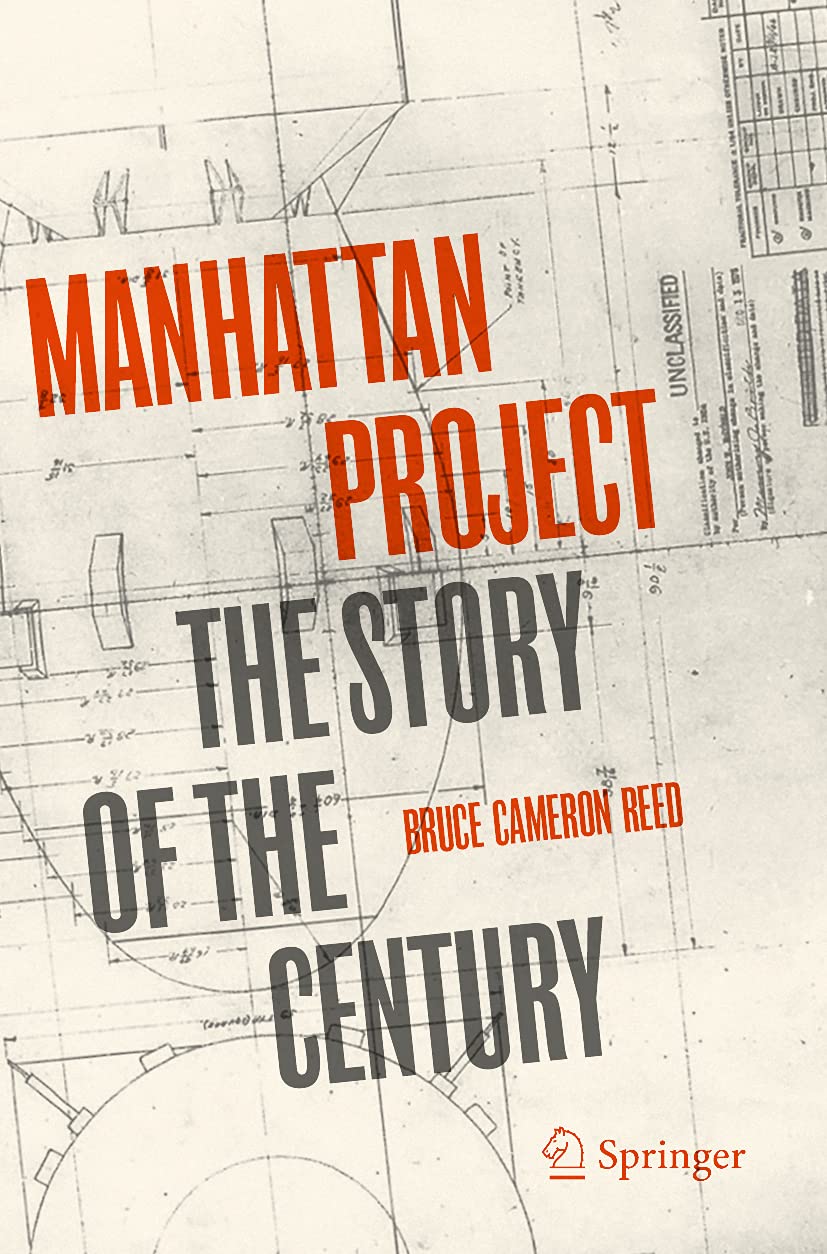
desertcart.com: Manhattan Project: The Story of the Century: 9783030457365: Reed, Bruce Cameron: Books Review: this is the book - I am a nuclear historian and have read almost everything published on the development of nuclear weaponry. I consider this book to be a very complete history of the Manhattan Project. In spite of this completeness of Professor Reed's history of the project (the development of the Atomic Bomb during World War II), his work is very concise and accessible to the layman. Professor Reed, who has written and taught extensively on these subjects and has authored works in the field that are highly technical, has produced a history that a layman with no familiarity with the history of nuclear weapons can read and enjoy. The book is not only very well written, but it was written with great attention to accurate detail. I have seen many books on the history of nuclear weapons that contain inaccuracies. I read this work with a critical eye open for inaccuracies, and I found none. Overview of the book. Professor Reed starts with some of the early atomic history and basic atomic physics. This is followed by the history and engineering that the U.S. Army Corps of Engineers Manhattan Project, led by General Leslie Groves, used to design, develop and deliver the first atomic bombs during World War II. There is a chapter on the work that was being done in Germany during that same time to develop an Atomic Bomb. This is an important subject, because the main reason the United States developed the Atomic Bomb was to beat the Germans, who were thought to be well on the way to developing this weapon. The book finishes, as one might expect, with details of the atomic bombardment on Japan which led to the end of the war. At the end of the book, there is available to the reader a chronology, some brief biographies, a glossary and a bibliography, set out with clarity and scholarship not often found in works on the history of atomic weapons. Most importantly, this book is a very enjoyable read. Laymen will find this book to be a great introduction to the subjects mentioned in this overview. Review: TEN STARS! - Far and away the best account I've read of the Manhattan project. Ten times more detail than most retellings of this story, but still completely readable and accessible. HIGHLY RECOMMENDED.
| Best Sellers Rank | #2,146,522 in Books ( See Top 100 in Books ) #10 in Nuclear Chemistry #243 in Industrial & Technical Chemistry (Books) #4,286 in History & Philosophy of Science (Books) |
| Customer Reviews | 4.4 out of 5 stars 30 Reviews |
J**Z
this is the book
I am a nuclear historian and have read almost everything published on the development of nuclear weaponry. I consider this book to be a very complete history of the Manhattan Project. In spite of this completeness of Professor Reed's history of the project (the development of the Atomic Bomb during World War II), his work is very concise and accessible to the layman. Professor Reed, who has written and taught extensively on these subjects and has authored works in the field that are highly technical, has produced a history that a layman with no familiarity with the history of nuclear weapons can read and enjoy. The book is not only very well written, but it was written with great attention to accurate detail. I have seen many books on the history of nuclear weapons that contain inaccuracies. I read this work with a critical eye open for inaccuracies, and I found none. Overview of the book. Professor Reed starts with some of the early atomic history and basic atomic physics. This is followed by the history and engineering that the U.S. Army Corps of Engineers Manhattan Project, led by General Leslie Groves, used to design, develop and deliver the first atomic bombs during World War II. There is a chapter on the work that was being done in Germany during that same time to develop an Atomic Bomb. This is an important subject, because the main reason the United States developed the Atomic Bomb was to beat the Germans, who were thought to be well on the way to developing this weapon. The book finishes, as one might expect, with details of the atomic bombardment on Japan which led to the end of the war. At the end of the book, there is available to the reader a chronology, some brief biographies, a glossary and a bibliography, set out with clarity and scholarship not often found in works on the history of atomic weapons. Most importantly, this book is a very enjoyable read. Laymen will find this book to be a great introduction to the subjects mentioned in this overview.
L**Y
TEN STARS!
Far and away the best account I've read of the Manhattan project. Ten times more detail than most retellings of this story, but still completely readable and accessible. HIGHLY RECOMMENDED.
A**R
Excellent Buy
Wonderful Book!
Trustpilot
1 week ago
2 weeks ago