

Desert Online General Trading LLC
Warehouse # 7, 4th Street, Umm Ramool, Dubai, 30183, Dubai
Desert Online General Trading LLC
Warehouse # 7, 4th Street, Umm Ramool, Dubai, 30183, Dubai
Full description not available
T**N
New milestone in Ninja research - highly recommended
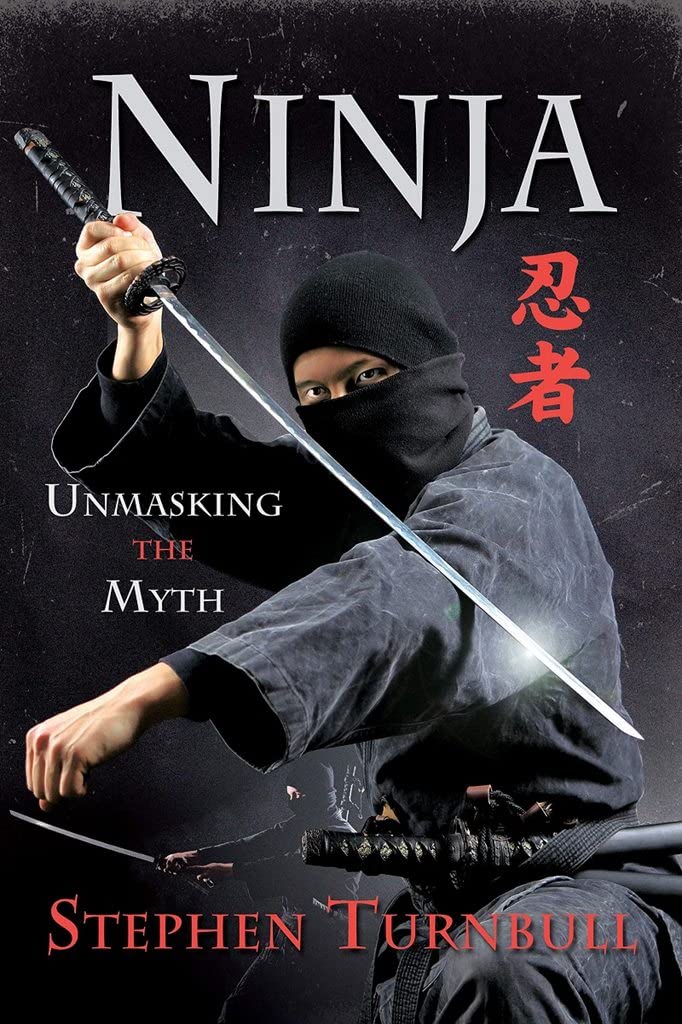
We had to wait quite a long time. Now the new book by Stephen Turnbull is finally there. "Ninja. Unmasking the Myth" comprehensively deals with the Ninja phenomenon historically and scientifically and intensely shakes the prevailing understanding. His line of reasoning is based on numerous original Japanese sources, some of which have never before been translated and included in academic discourse. His main goal is to separate facts from fiction and expose false assumptions and half-truths. Thus, the title of the book already gives us an indication of where the reader will end up being led to - namely unmasking the myth of Ninja.The author, Stephen Turnbull, is Professor emeritus of Leeds University and an expert on Japanese military history, researching for more than 30 years. He has been awarded the Cannon Prize by the British Association for Japanese Studies and the Japan Festival Literary Award and has published numerous books and scholarly articles on the samurai.Already in his 2014 essay "The Ninja: An Invented Tradition?" (Published in: The Journal Of Global Initiatives: Policy, Pedagogy, Perspective, Volume 9, Number 1: Interdisciplinary Reflections On Japan), based on his 2013 keynote speech at Kennesaw State University in Georgia, USA, Turnbull sets out the direction of his research efforts: he argues that the whole phenomenon is an invented tradition as defined by Hobsbawm and Ranger (1983) and much of what we believe to know about Ninja and Ninjutsu is simply wrong. And already at this point he provided good evidence that his research results are valid.ABOUT THE CURRENT STATE OF RESEARCHThe discussions about the Ninja phenomenon, the authenticity of historical traditions and the legitimacy of modern Ninjutsu schools are not new. Especially on the Internet, there has been lively discussion for years. Moreover, the subject area has become more and more part of an academic discourse. In the process, respectable academics, book authors and practitioners, military historians, Japanologists and hoplologists alike find themselves in a knowledge gaining process about the background and historical developments of the whole complex.Away from the common Ninja image and its popular scientific workup as by Andy Adams (1970 et al.), Donn F. Draeger (1977) and Stephen K. Hayes (since 1980), there are several approaches based on valid arguments that leave scratches on the previous construction. For example, Ikeda Hiroshi reports that ninjutsu has ceased to exist since the 19th century (What is a Ninja? In: Martial Science Magazine August 2015, pp. 55-56). Diane Skoss, journalist and Bujutsu practitioner, believes that today's Ninjutsu schools are not based on continued transmission of technique and culture. And Karl Friday, Professor emeritus of Japanese history, goes a step further, saying that the idea is highly questionable, that before modern times there might have been a special, specialized ninjutsu ryûha ("A Discussion on Ninja," in: Journal of Japanese Sword Arts 11/6 # 103 (1999), pp. 33-39).Since 2009, it is the British author Antony Cummins, who controversially deals with the historical Ninjutsu and argues that Ninjutsu per se is not a martial art with physical aspects, but a system of information retrieval and sabotage. He proves this, inter alia, by the translation and source analysis of historic textbooks, such as the Bansenshûkai, Shôninki and Ninpiden. His work is not undisputed, as he does not speak, read and write Japanese and is supported by a colleague who has not been trained in the translation of historical documents. On the other hand, Kacem Zoughari (2009), while sharing some points of recent findings, clearly believes that a specialized ninjutsu system has survived from generation to generation over the centuries to the present day and is still practiced today.ABOUT THE BOOKOn the basis of an intensive study of sources, Turnbull presents a book with 15 chapters and 230 pages, in which he, starting in the 7th century up to the today's time, deals comprehensively with the Ninja theme. He uses sources that he did not have in 1991 when he first worked on this complex (see Ninja, The True Story of Japan's Secret Warrior Cult). Only since working with Mie University, which in 2012, under the direction of Professor Yamada Yûji, launched the Iga Ninja Culture Collaborative Field Project research project, which eventually culminated in the 2017 International Ninja Research Center), for which Turnbull held the opening lecture.After elaborating on his motivation for his book in the preface, Turnbull begins his work with a study of how and by whom the different terms for Ninja (including Nin-sha, Shinobi, Shinobi-no-mono, Ninjutsu-mono, Ninjutsu-sha, Ninjutsu-tsukai) and how their use has changed over time. In doing so, he notes that essentially the term Shinobi has been the predominant one for a long time.Turning to the origins and historical evolution of the ninja phenomenon, Turnbull then uses three sets of sources for his study (p. 4). At first he looks at how the archetypal Ninja - dressed in black and equipped with a unique arsenal of weapons - is understood today. He uses this image as a starting point for a comparison with an image that might have existed in the past. In the next step, he looks at narratives of secret warfare by unbiased eyewitnesses from a time before 1600, in which wars were still waged in Japan. Finally, Turnbull devotes himself to the extensive written material from the period after the times of war in Japan ended. He finds out that the Ninja image in the writings of the peaceful Tokugawa period (1603-1868), which is essentially the basis for today's image of Ninja and Ninjutsu, has been exaggerated and manipulated by contemporary authors and already to this time no more corresponded to its historical origins.In Chapters 3 to 6, Turnbull gives his readers a comprehensive view of the geography and history of the Japanese regions of Iga and Kôka, which are considered to be the origin of the ninja idea, especially in modern literature. In it he presents, inter alia, five authentic reports - four of them for the first time in English translation - of secret operations that were carried out at that time by “Iga warriors". However, according to Turnbull, contemporary reports of this kind end as early as the 1580s, until such actions will only be discussed again in the 20th century (see p.76: "The Iga component of the Ninja myth was lying dormant and would slumber on like Sleeping Beauty, ready to be awakened during the twentieth century by a kiss from a handsome prince.").For the descendants of the two groups of Iga and Kôka, Turnbull notes, were now responsible for internal security at the court of the Shôgun in Edo and also engaged in information gathering (Chapter 7). This completely changed their field of activities: "... the two names meant nothing in terms of spying in 1590, by about 1680 they meant everything" (see page 87). According to Turnbull, to the underground operations from the Sengoku period (1467-1603) another aspect of the Ninja myth has eventually been added (see page 95).In Chapter 8, Turnbull leaves the development of the myth for a moment and takes up the subject of ninjutsu (p. 96: "a topic over which there is a certain sensitivity that is largely absent from discussions of ninja.") dedicated to the following pages from the early Tokugawa period to the 20th century. He uses various writings, such as the military handbook Buyo Benryaku of 1684 or the chapter "Iga Ninjutsu" of Iga Kyûkô of Kikuoka Jogen from 1699, which he considers essential for the creation of the ninja myth (see p. 98) and which are said to have mainly supplied the material for every popular Ninja book since the early 20th century (see p. 100). Many of these scrolls are now available in translation. However, Turnbull points out that most have been reworked, parts are missing due to better comprehension and translations are simply not accurate ("... the word Ninja is regularly inserted where it never appears in the original", see page 100). For the classification of these written sources into the overall complex, Turnbull comments on the respective Japanese original version: the Gunpo Jiyoshû of 1653 (pp. 102-103), Shinobi no den, published around 1700, and also known under the name Ninpiden (pp. 103-104), the Mansenshūkai / Bansenshūkai of 1676 (pp. 103-107) and the Shôninki of 1681. In addition, Turnbull uses the Ninjutsu Ôgiden, published around 1800 for his research, and for which he presents a complete translation (pp. 109-112).In the next chapter, Turnbull devotes himself to Ninja in popular culture and presents examples of illustrations, such as those of the Japanese artist Hokusai (1760-1849), which, however, according to Turnbull in no connection to the historical role models, and certainly not to the Shinobi from the text already described by him. The same applies to the multitude of historical novels and heroic stories as well as the silent and sound films of modern times, so that in the following chapter 10, he finally arrives in the 20th century and the central figures of today's Ninja picture, Itô Gingetsu (1871-1944) and Fujita Seikô (1899-1966). Their self-contradictory works who use the distorted ninja image of the historical textbooks and were mixed with misinterpretations of the authors (see page 123), ultimately represent the hitherto uncontradicted ninja image of the 1960s, according to Turnbull.Turnbull, however, identified Okuse Heishichirô (1911-1997) as the "Inventor of the Ninja" (see p. 144), at the time city official and mayor of Iga, who together with the novelist Adachi Ken'ichi placed the Iga region in the focus of public interest (Chapter 11). Chapter 12 shows us the evolution of the Ninja in the film and how Ninjutsu has been developed into a martial art by the film industry and its advisors.Turnbull looks at the "Ninja weapon par excellence" (see p. 166), the Shûriken, in order to show that parts of the Ninja image have been added over and over again over time. His case study (Chapter 13) shows that Shûriken, in the form of today's known throwing stars, are in part a modern invention and were introduced to the Ninja world by Fujita Seikô in 1936. Chapter 14 then looks at how cities today capitalize the myth for commercial purposes.Finally, at the end of his work, Turnbull concludes that while the origins of our Ninja image derives from the secret warfare from before 1600, it has been reinvented over the centuries. So, what we now consider ninja and ninjutsu are, after all, nothing more than modern constructions made up of historical mosaic stones in the first half of the 20th century.ASSESSMENTNot for the first time Turnbull deals with the topic Ninja. In the past years since the early 1990s, he has dealt with this matter several times. However, according to him, he was no longer satisfied with this work. He commented this circumstance already in his essay of 2014 (see above) extremely self-critical, when he stated that he wrote his book from 1991 too enthusiastic and little unreflected ("... I shall re-examine the evidence with a degree of academic rigor that may have been lacking in 1991").This time, he is presenting a scholarly treatise on this aspect of Japanese history, exploring the myth of Ninja thoroughly, and unmasking it as the title implies. Turnbull succeeds in doing so very well by using numerous original sources and placing them in their respective historical contexts from their origins to the present day. At the same time, he is always guided by the latest findings of his Japanese research colleagues who, at the latest since the establishment of the research focus Ninja at Mie University, strive for a comprehensive scientific review of this Japanese cultural heritage. Much has already been achieved along the way, but further research is needed to capture all facets, as Turnbull notes quoting his colleagues (p. 191).The result is the finding that today's common concept of the Ninja is a constructed image that only developed in the 1950s/60s to what it is today. Many of the previous discussion points have thus reached a new dimension. For example, the findings challenge active ninjutsu factions who see themselves as part of a historically transmitted lineage and defend their alleged authenticity like "members of a religious cult" (Turnbull). It is to be expected that not least of all this will undoubtedly give rise to many critical voices which will doubt the results of Turnbull's work.Since Turnbull uses many technical terms and Japanese words, knowledge of the subject matter and Japanese history - although not absolutely necessary - will help you reading the book. The countless remarks by the author, which provide valuable information in addition to the text, can be found as endnotes at the end of the book, but are cumbersome to look up. That some sources are mentioned in the endnotes but are missing in the bibliography is ultimately negligible. It would have been a useful addition if the author would have translated the titles of the Japanese sources in the bibliography for better understanding and content.Conclusion: Turnbull's work not only joins in series of prominent works, which have made it their goal to illuminate the myth Ninja more scientifically. He rather sets a new bar. My Rating: Highly recommended. It is to be hoped that more dedicated researchers will soon embrace this interesting aspect of Japanese history and present their findings to the non-Japanese-speaking readership.Review by HOPLOblog
O**R
Great read for martial art enthusiasts
A great book that really breaks so many inaccuracies around the ninja myth.Well researched and written although a map and trimline of important events and locations would have helped to be included to better understand what was going on at some points in history.
C**S
Ninjas, commercialised fantasy shinobi?
This book is written by historian Stephen Turnbull and attempts to uncover the truth behind ninjas. Some major points are1)Ninja were called shinobi, not ninjas2)There is no evidence they dressed in black3)There is no evidence they used shuriken4)There is no evidence they had magical powers5)Ninja skills are related to spying not one-to-one combat techniques, the ninja training manualshave no fighting techniques, let alone a total martial art.This book claims that the modern ninja is inspired by history but fictionalised, for example the shuriken was a obscure Jiu Jitsu weapon that was first attributed to ninjas in 1956. The swastika shuriken that appears in so many ninja books, first appeared in a 1962 tv series Onmitsu Kenshi the shape change been the result of the concern that normal shuriken(with points) was too dangerous to use on set!A important aspect to understanding the modern ninja is that it is a product of modern commercialisation (loosely inspired by history) which is used to attract tourists, make films and sell branded products such as ninja beer, ninja underpants and ninja toilet paper!Some modern re-imaginings turn the ninja into super warriors to inspire good behaviour in children or people like Stephen Hayes(of 1980's ninja books fame) turn the ninja into "is in truth the bearer of the universal light in a world that sometimes grows dim", a far cry from the spies and robbers of history.This quote from the last page sums up the book quite well:"In conclusion, the ninja myth, which has its origins in authentic accounts of undercover warfare in Japan, has reinvented itself over the course of many centuries, and never has this been more true than in the time since World War II. When Japan emerged into peace and prosperity a young and fresh consumer market called for heroes of its own. An appropriate response was made, and in a burst of creative energy and even more creative marketing the ninja myth entered its crucial phase as out of the silver screen stepped a figure whose existence had been hinted at for centuries. "I found this book to be a intriguing read and would recommend it to anybody interested in ninjas or how fact and fiction merge together.
K**R
An excellent read
If you, like I had, the view of the ninja as being peasant warriors dressed all in black, who were the bane of the Samurai. This books blows that myth from the water. It's not written for the popular reader but more from a academic perspective but that doesn't reduce in it's readability, it's a real page turner.
J**R
A huge Step Forward
During my 60 years (and still counting) practice of the martial ways I have always warned interested enquirers away from Ninja studies and dismissed D.r Turnbulls previous Ninja works as fiction, to the annoyance of so called students of ninjutsu! Having said that it gives me great pleasure to compliment him on this his latest book on the subject, it is a courageous reappraisal of the subject which does him credit - along with his recent paper of the ninja it does a great deal to set the record straight. In my humble opinion Dr. Turnbull writes better when presenting in an academic manner as a historian and not in his previous slightly populist manner which I recognize is for the 'popular' market, I look forward to reading future books by him which I hope will be presented in a similar academic form.
A**S
from the reality of the historical ninja in 1500's Japan to the worldwide super star we all know today
Turnbull in this book shows how the figure of the ninja has grown into a world wide icon, from the reality of the historical ninja in 1500's Japan to the worldwide super star we all know today. It shows how much of what people consider ninja today was invented along the years and how it burst on to the world stage, far removed from the historical figure. Get the book.
Trustpilot
3 weeks ago
1 month ago