Desert Online General Trading LLC
Dubai, United Arab Emirates
Desert Online General Trading LLC
Dubai, United Arab Emirates

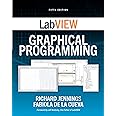
LabVIEW Graphical Programming, Fifth Edition
M**N
On time.
Exactly as described.
S**S
Much more than just the basics. A must-have for every LabVIEW Developer.
This is so much more than just a book about the basics of LabVIEW. Actually the basics and semantics are just a small part of it, there is also a large part about frameworks, architecture and software engineering. I feel like it describes the journey that I made in LabVIEW the past 2 or 3 years. Wish I could have read this book sooner. It's definitely a very good resource for all LabVIEW developers. The real power of the book is that it addresses all levels of LabVIEW developers whether you are a beginner or an expert. Things are explained without being too complicated for beginners or too easy for experts. The very good mixture between basic knowledge and background information keeps it interesting for everybody. The fact that it is written in a narrative style makes it much easier to read than most technical books. A must-have for every LabVIEW developer.
P**I
dataflow + measurements + oop + solid + actors = engineering super powers
Book is worth it's weight in gold. I would love to see this book being used to teach and on-board all new engineers programming in LV. The combination of OOP, SOLID Principles, Actor Model with fundamental measurement techniques and understanding data-flow is brilliant. I would recommend the book to text based programmers as well, because understanding how data flows through your application, the completely natural way of creating pure, by value software is a mind-bending and life changing experience. I am the most fortunate puppy that I learned programming graphically and only then moved to text. It feels like having superpowers :D
L**D
A complete go-to reference to modern LGP understanding
I remember how essential the first addition of LGP was to my team in the mid-90's. This edition is just such a resource. From the simple origins, through LOOP, frameworks, core principles (the philosophy of SOLID and ISP); unit testing and more. And the accompanying code available on GIT HUB is golden.
P**8
independent chapters, well-indexed
Started with Chapter 8 - completely self-contained. Need-driven into the index and readily able to find information. The downside is actually on LabVIEW itself because Linux is not well-supported. That probably means I actually have to buy 'one of the other systems'.
F**E
Required for all LV people
Great book that should be read by not only beginners but also for those seasoned veterans of the LabVIEW world. If everyone who coded LabVIEW read this book, I wouldn't have to be frustrated taking over other people's code.
L**Y
Good LabVIEW book, but needs to be polished.
I had a high expectation since the book is written by a very active ID from NI community. However, I am disappointed for the following reasons.1. Most block diagram pictures are blurred and impossible to read. At least, call outs can be made illegible easily if the authors really care.2. The book quotes a lot of posts from NI community. Can we guarantee post links will still be valid 10 years later? Knowledge should be filtered by authors and present to readers on a book. Instead, I see "go read this and that" in lots of places. I would say the book is not self contained. Just my personal opinion: a good book should be well organized and would help readers to gain necessary knowledge in a reduced amount of time. This book apparently failed in this regard.3. Sometimes, the authors just mention some literature and move on without further discussion for an important topic. For example, pp.244, MAL (measurement abstract layer) has 8 lines of wording. How about your implementation or is an example still in production???3. The book is definitely NOT for beginners. There are a couple of interesting examples, the authors assume readers know everything and do no bother to walk through design logic. For a beginner, you will definitely be frustrated.4. Quoting is messy. On pp354-355, Ref [75], [76], [79] are the same. ref[77], [78] are the same.5. Chapter 5 Actor Framework is the main reason, I purchase this book for. The example project "AF Acquisition" presented is against SOID in OOD, as the authors repeated in this book. In this example, Acquisition and Acquisition UI actors are highly coupled when updating graph data on UI at the caller actor side. I would recommend watching Tom McQuillian's Youtube Actor Framework tutorial #9 about this topic. Instead, 7-8 pages later, the authors mentioned, abstract messages can be used to achieve zero coupling but only mentioning for using abstract messages for "start acquisition and stop acquisition, and added the comments saying "if you don't feel comfortable..., don't move on to understanding zero coupling". Wow, as a student, I would like to have my money back or ask for a better instructor/professor assigned.
O**N
From beginner to expert
This book is full of things you need to know to reach another level in your development proficiency even if you've been programming for a lot of years with LabVIEW.This is a must-have!
Trustpilot
5 days ago
1 month ago