
DOWNLOAD THE APP


Customer Services
Copyright © 2025 Desertcart Holdings Limited
DOWNLOAD THE APP
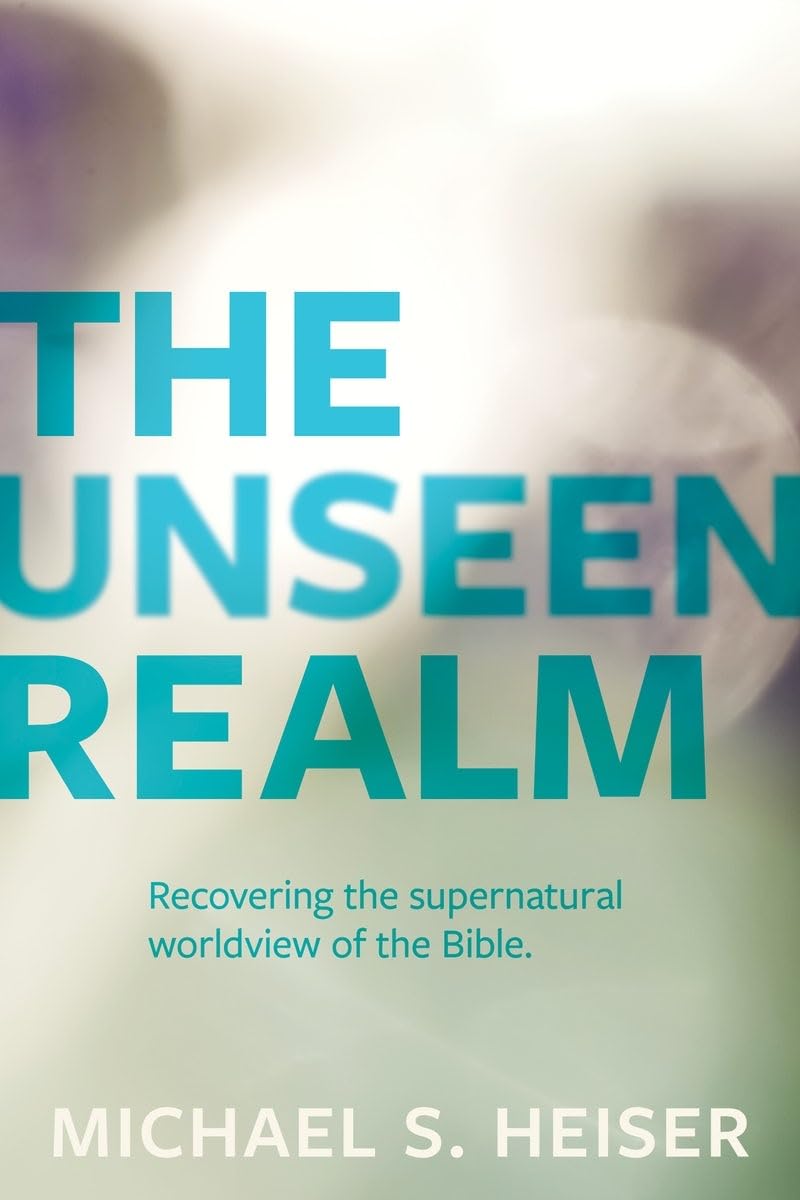
The Unseen Realm: Recovering the Supernatural Worldview of the Bible [Michael S. Heiser] on desertcart.com. *FREE* shipping on qualifying offers. The Unseen Realm: Recovering the Supernatural Worldview of the Bible Review: Eye-opening Exposition of the Bible - I have the paperback which is 387 pages, plus Acknowledgments and Index. The book is well-written. I am a Christian and have read the Bible many times. Dr. Heiser's exposition on portions of the Bible were not something I had encountered before. I'll let Dr. Heiser speak for himself: "My goal is simple. When you open your Bible, I want you to be able to see it like ancient Israelites or first-century Jews saw it, to perceive and consider it as they would have. I want their supernatural worldview in your head." Pg. 13. Genesis 6:1-5, Psalm 82, Deuteronomy 32 and other Biblical passages, including New Testament passages reflect a worldview that at least to me was unfamiliar. His approach to exegesis of the Bible seems orthodox to me. Once again, I'll let Dr. Heiser speak for himself: "I still believe in the uniqueness of the God of the Bible. I still embrace the deity of Christ." Pg. 13. Nevertheless, looking at the Bible through this worldview is, for me, deeply affecting and not in a negative way. The existence of a heavenly host, not all of which honor God, God's desire for an Eden even after the failure of the first Eden, and three rebellions, not just one, all based on divine Scripture, were deeply educational and enlightening to me. The author argues for his points carefully and cites numerous scholarly treatises to support his arguments. The book also makes connections within the Bible to connect various passages, which a first-century Jew or Christian, assuming some literacy, would have recognized that a 21st century Christian, such as me, completely misses. The cosmic geography idea is not something I have encountered before. The book also provides background on the interpretation of Hebrew words and the author is careful to focus the range of acceptable interpretations. Elohim, in particular, gets careful exposition. If the topic interests you, I recommend the book highly. If you'd like to try out the late Dr. Heiser's thoughts first, he has a number of YouTube videos running from 15 minutes to 1+hour in length for you to watch. Review: Expand your understanding of the Bible - While a careful reader of this book may not agree in every detail with Heiser’s claims, and while there a few points that could have been added to make a fuller account, The Unseen Realm is a rich synthesis of the biblical theme of God’s supernatural administration of the created order. It is well supported by references to recent scholarship, yet it is quite accessible to those who are serious students of the Bible, but who may lack a knowledge of biblical languages, or access to scholarly resources or research tools. Its tone is colloquial and even conversational at times, sustaining interest throughout. While its main appeal will be to Protestant evangelicals, I believe that faithful Catholics will also find the book to be enlightening, if they keep the Catechism of the Catholic Church within reach. Heiser seeks to read each section of the Bible on its own terms, searching for an understanding that would have been shared by its original readers. This is a strength, and a welcome emphasis in an age when the truths of Sacred Scripture are so frequently obscured by artificial consensus. He connects the dots to make sense of difficult passages that preachers, lectionaries, and Bible Study curricula too frequently avoid. I recommend this work to all serious adult students of the Bible. Prepare to be challenged and fascinated.


| Best Sellers Rank | #6,452 in Books ( See Top 100 in Books ) #8 in Christian Historical Theology (Books) #13 in Christian Bible Exegesis & Hermeneutics #113 in Christian Bible Study Guides (Books) |
| Customer Reviews | 4.8 out of 5 stars 3,432 Reviews |
F**G
Eye-opening Exposition of the Bible
I have the paperback which is 387 pages, plus Acknowledgments and Index. The book is well-written. I am a Christian and have read the Bible many times. Dr. Heiser's exposition on portions of the Bible were not something I had encountered before. I'll let Dr. Heiser speak for himself: "My goal is simple. When you open your Bible, I want you to be able to see it like ancient Israelites or first-century Jews saw it, to perceive and consider it as they would have. I want their supernatural worldview in your head." Pg. 13. Genesis 6:1-5, Psalm 82, Deuteronomy 32 and other Biblical passages, including New Testament passages reflect a worldview that at least to me was unfamiliar. His approach to exegesis of the Bible seems orthodox to me. Once again, I'll let Dr. Heiser speak for himself: "I still believe in the uniqueness of the God of the Bible. I still embrace the deity of Christ." Pg. 13. Nevertheless, looking at the Bible through this worldview is, for me, deeply affecting and not in a negative way. The existence of a heavenly host, not all of which honor God, God's desire for an Eden even after the failure of the first Eden, and three rebellions, not just one, all based on divine Scripture, were deeply educational and enlightening to me. The author argues for his points carefully and cites numerous scholarly treatises to support his arguments. The book also makes connections within the Bible to connect various passages, which a first-century Jew or Christian, assuming some literacy, would have recognized that a 21st century Christian, such as me, completely misses. The cosmic geography idea is not something I have encountered before. The book also provides background on the interpretation of Hebrew words and the author is careful to focus the range of acceptable interpretations. Elohim, in particular, gets careful exposition. If the topic interests you, I recommend the book highly. If you'd like to try out the late Dr. Heiser's thoughts first, he has a number of YouTube videos running from 15 minutes to 1+hour in length for you to watch.
D**N
Expand your understanding of the Bible
While a careful reader of this book may not agree in every detail with Heiser’s claims, and while there a few points that could have been added to make a fuller account, The Unseen Realm is a rich synthesis of the biblical theme of God’s supernatural administration of the created order. It is well supported by references to recent scholarship, yet it is quite accessible to those who are serious students of the Bible, but who may lack a knowledge of biblical languages, or access to scholarly resources or research tools. Its tone is colloquial and even conversational at times, sustaining interest throughout. While its main appeal will be to Protestant evangelicals, I believe that faithful Catholics will also find the book to be enlightening, if they keep the Catechism of the Catholic Church within reach. Heiser seeks to read each section of the Bible on its own terms, searching for an understanding that would have been shared by its original readers. This is a strength, and a welcome emphasis in an age when the truths of Sacred Scripture are so frequently obscured by artificial consensus. He connects the dots to make sense of difficult passages that preachers, lectionaries, and Bible Study curricula too frequently avoid. I recommend this work to all serious adult students of the Bible. Prepare to be challenged and fascinated.
M**.
Well written. Thought provoking.
Michael Heiser has made a more supernatural reading of the Bible that hinges around interpretation of Psalm 82 and Genesis 6. It, however, makes sense with many spots in the scriptures and with writings from other Middle East cultures The book is thorough, containing many references. Be ready to put on your thinking cap.
S**L
Very good indepth book
Very in-depth interesting book about hard to understand subjects that author Michael Heiser explains like nobody else can. Highly recommended.
J**D
Much Needed Information for Your New-Self
Great coverage of the spiritual realm. Recommend this book for every born-again believer. If I would have read and studied this book right after my baptism, I would not have had such a difficult time adjusting to my new spiritual self. We are new-born babes with no concept of the spiritual world that we are now a part of. This book has great insight to what living is like after being born-again. It is a necessity if your church does not teach you about the new environment you are in as a new believer.
C**A
You'll see the unseen reason (not literally)
If you haven’t watched the late Dr. Michael Heiser lecture on this subject, I highly recommend starting there. His teaching provides a solid framework that will make this book not only clearer, but far more impactful. Then buy the book. You won’t regret it — especially if you truly want to understand why we don’t need to fear the “powerful nemesis” we’ve been taught to be terrified of. I read this book with a sense of awe and “fear and trembling,” yet somehow, by the end, I still found myself humming, “Everything is awesome!” It’s that kind of book: eye-opening, unsettling, clarifying, and strangely comforting all at once.
D**R
The Unseen Realm
The seller was grea. The book is great
D**D
What an Amazing Legacy Dr Heiser Has Left for Us
I’ve read Dr. Heiser’s first edition of The Unseen Realm, and reread it because it was so profound. I heard about the new expanded edition from the podcast The Divine Counsel World View, and I’m excited to add it to my collection of Dr. Heiser‘s books - all of which I have in my library. I highly recommend The Naked Bible Podcast - his original podcast before he died, which is still available to listeners.
Trustpilot
5 days ago
1 week ago