Some deliveries may take a little longer than usual due to regional shipping conditions.

DOWNLOAD THE APP


Customer Services
Copyright © 2025 Desertcart Holdings Limited
DOWNLOAD THE APP


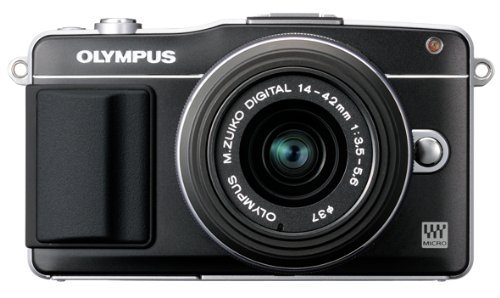

📷 Elevate your storytelling — capture life’s moments before they slip away!
The OM SYSTEM OLYMPUS E-PM2 is a compact mirrorless camera featuring a 16MP Live MOS sensor and TruePic VI processor for vivid, high-quality images. It offers fast 8 fps continuous shooting, a 35-point contrast-detect autofocus system with face and eye detection, and a responsive 3-inch touchscreen LCD. With ISO sensitivity up to 25,600, in-body image stabilization, and 12 creative Art Filters, it excels in diverse shooting conditions including low light. Full HD 1080p video recording with live filter effects and a built-in flash add versatility, making it ideal for professionals and enthusiasts ready to upgrade from compact cameras.
| Metering Methods | Multi, Center-weighted, Spot |
| Exposure Control | Aperture priority, Automatic, Program AE, Shutter priority |
| White Balance Settings | Auto |
| Crop Mode | 4:3 |
| Screen Size | 3 Inches |
| Display Type | LCD |
| Dots Per Screen | 460000 |
| Display Fixture Type | Fixed |
| Touch Screen Type | Yes |
| Display Resolution Maximum | 460000 |
| Has Color Screen | Yes |
| Flash Memory Type | SD/SDHC/SDXC |
| Write Speed | 8 fps |
| Flash Memory Bus Interface Type | SDIO or SDHCI |
| Compatible Mountings | Micro Four Thirds |
| Sensor Type | CMOS |
| Image stabilization | Sensor-shift |
| Maximum Aperture | 3.5 f |
| Expanded ISO Minimum | 200 |
| Photo Sensor Resolution | 16 MP |
| Photo Sensor Size | Micro Four Thirds |
| Maximum Shutter Speed | 1/4000 Seconds |
| Minimum Shutter Speed | 60 seconds |
| Form Factor | Mirrorless |
| Special Feature | Image Stabilization |
| Color | Black |
| Item Weight | 9.44 ounces |
| Video Resolution | FHD 1080p |
| Viewfinder | Electronic |
| Flash Modes | [Auto, High-Speed Synch/Second Curtain Synch] |
| Camera Flash | Built-In |
| Skill Level | Professional |
| Compatible Devices | Micro Four Thirds |
| Continuous Shooting | 8 |
| Aperture modes | Aperture priority |
| Flash Sync Speed | 1/250 sec |
| Video Capture Format | mpeg-4;h.264;motion_jpeg |
| Expanded ISO Maximum | 1600 |
| Battery Weight | 2 Grams |
| Delay between shots | 0.13 seconds |
| Battery Cell Type | Lithium Ion |
| Battery Average Life | 360 Photos |
| Battery Type | Lithium-Ion BLS-5 rechargeable battery & charger |
| Processor Description | truepic 6 |
| File Format | RAW, JPEG, RAW+JPEG, MPO(3D still) |
| Effective Still Resolution | 16 MP |
| JPEG Quality Level | Normal |
| Bit Depth | 10 Bit |
| Total Still Resolution | 16 MP |
| Maximum Focal Length | 84 Millimeters |
| Optical Zoom | 3 x |
| Lens Type | Standard Zoom |
| Zoom | Optical |
| Camera Lens | Telephoto lens with a maximum focal length of 84 millimeters |
| Minimum Focal Length | 14 Millimeters |
| Real Angle Of View | 7.5 Degrees |
| Number of Diaphragm Blades | 8 |
| Photo Filter Thread Size | 37 Millimeters |
| Connectivity Technology | HDMI, USB |
| Wireless Technology | EyeFi |
| Video Output | HDMI |
| Total USB 2.0 Ports | 1 |
| Total USB Ports | 1 |
| Total Video Out Ports | 1 |
| Shooting Modes | Automatic, Shutter Priority, Movie |
| Digital-Still | Yes |
| Movie Mode | Yes |
| Image Capture Type | Stills & Video |
| Night vision | No |
| Auto Focus Technology | Continuous, Contrast Detection, Face Detection, Live View, Multi-area, Selective single-point, Single, Touch, Tracking |
| Focus Features | Contrast Detection |
| Autofocus Points | 35 |
| Focus Type | Auto Focus |
| Focus Mode | Automatic AF (AF-A) |
| Autofocus | Yes |
J**N
3 Days with the EPM2
BACKGROUND:I have been shooting for 12 years, with some paid jobs and extensive photos, in the field of low-light action (opera/theater shoots), as well as landscape, astrophotography, portraiture, and off-the-cuff every-day shooting. I also did portrait sessions, pre-wedding glamour shots, and wedding reception photography. I've owned many cameras, starting out with the Kodak CX7300 that my dad got me for Christmas when I was 12 years old, then getting a Canon Digital Rebel XT courtesy of my uncle who used to be a Canon regional sales rep, and eventually buying 10-22mm, 50mm f/1.4, 24mm f/1.4L, 70-300 4-5.6 IS, 22-55mm (older slightly unconventional kit lens), and 100mm f/2.8 macro. These were all highly enjoyable lenses and cameras and I did a great amount of shooting. I was greatly invested in the system. I worked all summer when I was 16 to save up for a 5D since I craved the look of 35mm film that I got in darkroom class in high school. I sold off my XT and ended up with a 5D, 50/1.4, 24/1.4L, and 70-300. This gave me great results but in 2013, I was starting to feel like the 5D was dated. The lenses were awesome but I had to do a lot of editing to get my pictures the way I liked them to look--i.e. editing out vignetting, chromatic aberration in the 24mm (mk I), and taking out noise. The 5D felt great in my huge hands but the LCD had inaccurate colors, I had to attach a large speedlite for flash, and I just stopped bringing it with me to shoot because of its heft. I wanted something smaller and up-to-date.Due to a lack of justification to hold on to a system I was barely using anymore, and a day job that wasn't in photography, I sold all my Canon gear and in 2014 bought a Fuji X100. WOW... This camera was an interesting beast. The quality is the closest I've seen to film in any camera. The JPEGs really are that good. The sharpness was great and natural looking, the noise was well controlled and pleasant if there at all. The dynamic range with the DR400 setting was so convenient and amazing! I couldn't believe some of the shots I could get, especially landscapes. Ultimately, however, I ended up selling this camera because of two huge problems... the general lack of responsiveness and the inability to change lenses. I knew that it would be limiting to only have 35mm equiv lens, but I really did miss shooting with a 50mm or a 70-300 and blurring out the world. Also, even with the latest firmware, the focus was very unreliable even in *decent* light and to turn on the camera, focus, and get the shot, was sometimes impossible due to the delays. I missed a decent amount of shots because of it. And I realized that the great image quality of a camera is wasted if you can't get a hold of a shot.So, here comes the EPM2 (finally!)Just a few days ago, I received my EPM2. I decided on the camera for a couple reasons... the very small size and lightweight quality of the camera, the great selection of (just as small) lenses, the reported quick, reliable auto-focus and responsiveness, and the quality-to-size ratio compared to other small cameras. In general I do *not* take DXO Mark sensor scores seriously. I think they are a useful tool to look at dynamic range, however. And the EPM2 was rated over 12 EV which is typically excellent. My idea was that this, along with the small size, different selection of gradation modes, and quick start up and autofocus times, I would have more luck with this camera.Since I've only had the camera for literally 3 days, this is obviously an early-on review. I'm still getting used to the layout and the system in general. Right away, I noticed HOW SMALL the thing is. Very small and light, but still solid, and a very attractive white body with tan grip. Very cute. I have large hands (I'm 6'1, lanky, VERY large hands) and the grip isn't as bad as I expected based on the dimensions of the body. The grip material is nice and ever so slightly pliable, so that one's fingers can push in and feel secure with it. The tan grip on the back of the camera is also well textured and well placed, so fortunately, I haven't felt insecure holding the camera.I did some research prior to my purchase and knew that there were menus to "unlock," so right away I unlocked it and started setting up custom button options, sharpness, saturation, etc. I found that the default setting for the images was a little too sharp. I set my sharpness to -1 and I like the sharpness much better. The colors SOOC are pleasing, if a tad bit warm. I actually do like that and left the White balance mode in "warm" but we'll see if I grow sick of it. I also kept gradation mode on auto since it seems to make the right choice depending upon the scene.With the 14-42 lens (which has an ever-so-touchable zoom ring) I have attained many keepers already! Shooting my coworker's dog on a lunch break the other day proved very fun and I got lots of in-focus pictures of the dog at 8fps! EIGHT FPS THAT IS SO FAST!!! I remember when the Canon 1D Mark III came out and 10fps seemed ungodly fast! I had a few out-of-focus shots but it was totally my fault. I'll get there. Of course, with the kit lens, or any other kit lens, the f/3.5-5.6 aperture is limiting. Certainly trying to get pictures of my cat with only one paper lantern lit was a little challenging...though the camera did great with AF, though it did need to use the AF assist orange lamp.The in-body IS seems to help but I honestly feel like optical IS seems more effective, at least when I used IS on my old Canon 70-300 or my dad's 17-55 2.8 IS. I have been able to get sharp images down to 1/15th of a second shooting at 42mm. I'll keep observing though and see how it works at slower speeds.Other things I've noticed... It just really is quite fast. Unless I haven't unlocked the lens, if I see something I want to capture, I've been able to capture it. Like my cat yawning, which I could never capture with the X100... just couldn't get the timing right. And that's what I've learned about my needs as a photographer...Timing is everything in photography, especially if the moment is fleeting. I could have the highest quality medium format digital sensor but if it takes 3 seconds to start up and mis-focuses, I have NO quality. But with the EPM2, I feel like I'm getting maybe not AS high of quality as the X100 but it makes up for it by actually HAVING the image, rather than having a smooth, noise free out-of-focus shot.Overall, I love the camera for its portability, wide range of native mount lenses, Panasonic, and 3rd party lenses. I can't wait to save and get a fast prime like I'm used to on the Fuji or Canon. The one thing I have noticed is that while sharpness is definitely comparable to the X100, I have noticed more chromatic noise starting around ISO 800. While this is easy to take out in post, the X100 corrected for this automatically. Please feel free to comment on my review to recommend an in-camera fix for this, but so far, I haven't found one. Besides this, I am highly impressed with the images and feel that the dynamic range, color, and overall look is of great quality. I also LOVE having a double exposure mode, but HATE digging through the menus every time to set it. I have everything set up so that I only have to press a button to do my most frequently fiddled-with settings, but I can't seem to figure out a way to program or get a shortcut for the multiple exposure mode. Feel free to comment if any of you know a solution to this as well.I would highly recommend the camera, though I will say I do miss having an EVF. Surprisingly, though, the LCD, while not as high-res as other current cameras, is very usable and I haven't minded shooting with it. Of course, down the road, I can get the add-on EVF if I want to. And that's a large reason why I picked this... it's a system, and when I get more money or I feel like I've grown out of it, I can upgrade and keep other parts of the system!! Great camera for just about any photographer! Can't wait to find out what it's really capable of, especially at night!! Thanks for reading!
M**R
Great value for a compact DSLR alternative
I am a photography amateur enthusiast. My other cameras are a Nikon D5100 and a D600 DSLRs with a range of lenses (prime and zooms). I've started shooting film back in early 90s on an old Nikon SLR.I also own a tiny pocket Canon ELPH HS300 point and shoot, which I wasn't really happy with. The pictures were rarely better than what I can take with my iPhone, at which point as small as the camera is, it's too big.I wanted something compact that could still take the breathtaking pictures my DSLR is capable of, and I spent a long time researching the best option. The main contenders were mirrorless cameras with largish sensors (for the form factor).Against a Fujifilm x100: I have to say Fujifilm's x100 (and the upcoming x100s) is a beautiful camera, I really like the retro look of it. It also features a great APS-C sized sensor on it, which makes for a great picture quality. The problem with this camera is the sluggish auto focus, which for a compact "walk around" camera is especially problematic (apparently the upcoming x100s is supposed to improve on this). It was also little pricey for what I wanted to spend.Sony RX100: Is a great little camera, which can take great photos. But I wanted something with a little bigger sensor and interchangeable lenses. You see I want to be able to invest the bulk of my money into lenses as no doubt the camera bodies become somewhat outdated every 2-4 years.And then I gave the Micro Four Thirds cameras a consideration. See the Micro Four Thirds is an open standard Olympus and Panasonic have created, where you can freely use all m4/3 lenses on any camera body. More companies are joining this alliance each month. As a result m4/3 cameras have the biggest selection of lenses of any mirorless camera competitor.It's exactly what this industry has needed for a long time. For companies to put an open standard together. No more vendor lock in and price gauging on lenses. Also you can be sure there will be long term support for this system as there appears to be quite a surge in popularity. More and more wedding photographers for instance are switching to this system, because of the ergonomics offered by much smaller and lighter gear required for all day shooting, as well as the selection of some really outstanding lenses for a decent price.Just on this alone, the choice for me was clear. All I had to do now is pick a micro four thirds camera.I've never used an Olympus camera before, but I've met photographers who have praised these cameras in the past. I read some reviews and researched the specs. I wanted compactness, and no need for a swivel screen.This narrowed the choice for me down to an E-PM2:- It uses the same sensor as the top of the line OM-D so technically capable of capturing the same quality images.- It is small and light.I really wasn't into the design of the camera, at first look I thought it was quite ugly, a more retro look would have been better, but that's just my taste. I have to say the look of the camera is growing on me though.I elected not to get the kit lens, and I went with the 20/1.7 LUMIX "pancake": Panasonic LUMIX G 20mm f/1.7 Aspherical Pancake Lens for Micro Four Thirds Interchangeable Lens Cameras lens (immediately taking advantage of the open standard!)So my first impressions after using this camera for a week (sorry for the long intro):Wow! In fact I am so impressed that I am actually thinking about selling my DSLR gear completely. I was little concerned that maybe I wouldn't like the native 4:3 aspect over the 3:2, but it turns out 4:3 is actually much more suited for portraits. In portrait mode it gives you more flexibility. Where it might lack is certain landscapes, but those can often be cropped to 3:2 without much loss in quality. I can't tell a difference in picture quality between this camera and my DSLR.Pros:- Autofocus. The speed at which this camera can auto focus and snap a photo is astounding. Way faster than my DSLR. In fact I thought the tap the screen to take a photo was a gimmick, but with such a fast AF, I find I am snapping twice as many photos than I normally do, and they are all in perfect focus. I was totally cough by surprise with how good snapping pictures feels with this camera, because of its responsiveness. There is a certain quality tactile feeling you get when you snap photos almost at the same time you touch the screen. A feature I didn't think I was going to use became my new favorite way of taking pictures. What's also great about it, if you're doing street photography, you don't even look like you're taking a photo. So your subjects are not distracted by it.- Image quality. I shoot raw. And I find photos have good dynamic range, which lets me do a lot with them when I post process in Lightroom. And I find even in low light I can take photos comparable to what I take with my DSLR.- Size. The camera is small and easy to cary, it fits in a jacket pocket, or a small bag. I can also now put it in my laptop case, and bring it to work with me.- Great UI As someone new to Olympus cameras, this was a concern. But I felt right at home with the user interface only after a few days of using the camera. I assigned the 'fn' key to my ISO settings, I shoot in Aperture Priority mode. Obviously this camera has much less dedicated buttons than the top of the line cameras, but I find E-PM2's buttons are sufficient for Aperture Priority style of shooting I do.- m4/3 availability of great lenses, with more 3rd parties announcing new products each month, it's truly exciting. Even things like pro cinema Black Magic camera coming out this year will feature an m4/3 mount. The adapters can be purchased for all sorts of lenses. In fact you can get a $31 C adapter and a CCTV lens RainbowImaging 35MM F1.7 TV Movie Lens + Lens Adapter for MFT M4/3 camera, fits Panasonic G1 G2 G3 G10 GF1 GF2 GF3 GH2 GH1 GH2, Olympus E-P1 E-P2 E-P3 E-PL1 E-PL2 which can let you create some very interesting effects/pictures. I've used my Nikon lenses on this camera and it works great. But the lack of focus peeking feature Sony cameras offer hinders this advantage somewhat.Cons:- None. Really, when it comes to price and what you get for it, I can't think of a single negative to say about this camera.Would like to see improved:- Manual focus. I haven't yet found the best way to take photos with adapted manual lenses. I have re-assigned my Rec button to let me zoom in. But its not ideal. Though this really can't be counted against the camera of this price, it would still be nice if it offered something like 'focus peaking' Sony cameras have. I think there is a way to use one of the Art filters to help with focus but its not ideal.- It's not a pretty camera. This might be just me. But would love a more retro (rangefinder look) at this price range. Like the OM-D without the rangefinder bulge would be beautiful. I went with the silver version. I would have liked the white version better if it didn't have the weird colored tan grip pad.Conclusion:One of the best buys in the category. You are not only buying a great camera but investing into a great system with great lens selection. You are also supporting an open standard in an industry dominated by proprietary lock-ins and price gauging.Edit July 3 2014: I have purchased this camera at the introductory price $500 and it was a great deal then. At the current price, this camera is a no brainer. There is simply nothing on the market that can compete with this value.
V**E
It was a fun camera for a few months while it was still ...
Shutter is permanently closed. It was a fun camera for a few months while it was still functional.
J**Y
Dead pixel
The camera seems to operate just fine, however a dead pixel on the screen is irritating especially on a new camera.
Trustpilot
4 days ago
3 weeks ago