


Desertcart purchases this item on your behalf and handles shipping, customs, and support to Australia.
🍞 Elevate your kitchen game with the mold that makes every loaf a masterpiece!
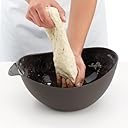
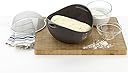
The Lékué Bread Silicone Mold is a 600 ml, brown, platinum silicone baking container designed to bake homemade bread effortlessly. Its unique design promotes steam circulation for moist dough and side vents for a golden, crusty finish. Lightweight and dishwasher safe, it combines mixing, proofing, and baking in one versatile, heat-resistant mold up to 428°F (220°C), making artisan bread accessible and mess-free for modern kitchens.








| ASIN | B007F6EN96 |
| Best Sellers Rank | 340,652 in Home & Kitchen ( See Top 100 in Home & Kitchen ) 524 in Cake Tins |
| Brand | Lékué |
| Brand Name | Lékué |
| Capacity | 0.6 litres |
| Colour | Brown |
| Country of Origin | China |
| Customer Reviews | 4.5 out of 5 stars 4,130 Reviews |
| Global Trade Identification Number | 08420460155331 |
| Included Components | Loaf Pan, Mould |
| Item Dimensions D x W x H | 23D x 28W x 13H centimetres |
| Item Type Name | Bread silicone mold |
| Item Weight | 1 Pounds |
| Item weight | 1 Pounds |
| Manufacturer | Lékué |
| Material | Platinum Silicone 100% |
| Model Number | 0200600 |
| Number of Items | 1 |
| Number of Packs | 1 |
| Part Number | 0200600M10M017 |
| Product Care Instructions | Dishwasher Safe |
| Product Warranty | 10 ans. |
| Product dimensions | 23D x 28W x 13H centimetres |
| UPC | 735343848551 791769431210 |
| Unit Count | 1.0 count |
S**E
Light and easy!
Having taken an interest in making sourdough bread, having watched many videos about making the sour starter (thanks Paul Hollywood) I kept seeing everyone talking about using a Dutch oven, so thought OK I will need to buy one. After looking and reading many reviews, cast iron was recommended, but at 6kg in weight I thought there is no way I can lift that in and out of the oven, then I came across this...........stick it on a baking tray, or a round enameled dish and your good to go, no mess, no trying to clean baked on dough that has burned black, just water and a sponge..........it makes perfect sourdough bread every time. So lite food grade silicone, my arthritic hands are grateful. Would highly recommend.
C**Z
Lovely effortless way to make bread.
Works really well and ended up with a really lovely loaf, made almost effortlessly. I tried the recipe based on 250g of flour but the loaf was too small for the effort I felt, so decided to try a larger quantity based on 500g flour and first attempt worked really well! Used the Lekue as a bowl to briefly mix a white bread dough based on 500g flour/375 water ( per Sandy's recipe/review on Amazon.com) until just combined, and left on the counter over night in the open position with a dinner plate over the top. Next morning between a cup of tea and breakfast, I removed the the very sticky mixture from the Lekue with the aid of a plastic spatula, - it came out clean - and I shaped the dough by hand in to a ball and dropped it back in to the lekue for a 1.5 hour rise. The rise wasn't significant over this time but I brushed over some water and put mixed seeds over the top before cooking in a fan oven at 200 degrees for 50 minutes in total - carefully opening it up after the first 25 minutes. Really pleased with the results... the bread had the nice hollow sound when knocked after backing, and the result was a chewy crust and nice open textured crumb. I find the rugby ball shape really appealing. I like the fact the Lekue acts both as a bowl and a dutch oven type baking container all in one, saving on washing up. I think the no knead bread recipe works well in this container - wetter doughs can be so hard to handle and transfer to the oven, and the Lekue helps as rising and baking happen all in one container. Plan to use this a lot more, and experiment with some speciality bread recipes.
L**A
Very good for shaping an oval loaf and keeping height
I'm a sucker for gadgets and have my fair share of unused paraphernalia stacked away in various cupboards, so I was half expecting this to be another one destined never to see the light of day. I was pleasantly surprised though, and I did find if vey helpful, particularly in the shaping of bread. I prefer to shape by hand, but had kept resorting back to a loaf tin, because my hand shaped attempts spread out sideways too much instead of upwards. I tried the Dan Lepard easy white loaf recipe to try the Lekue and it worked really well. I mixed the ingredients by hand in the Leuke (inside another bowl for a bit of extra stability until the liquid was mixed in). Using the Dan Lepard recipe i even did the 10 second kneading method in the bowl, but it would have been just as easy to turn it out on to the worktop. Where I found the Leuke worked a treat was shaping the loaf to a since oval oblong. Using a 400g flour/300ml liquid it was the perfect size and proved beautifully inside the closed Leuke. When it was ready for the oven, i opened the Leuke, dusted the loaf with flour, slashed the top, closed the Leuke and baked for 25mins. Then opened oven and unclipped the Leuke for another 5 mins. Then i took it completely out of the Leuke (very hot, be careful), and popped back in oven for another 10 mins. It turned out a lovely shape, really crusty and delicious in taste. So i recommend it, especially if you are having difficulty shaping the loaf for proving. If not, then you can probably do without it, but it does keep everything contained, so much less mess and really does work. I highly recommend checking out Dan Lepard White and wholemeal loaves. There is a good video of the white loaf on the Guardian website, although when you click through to the recipe it is slightly different to the video with the proving method and times. http://www.theguardian.com/lifeandstyle/australia-food-blog/video/2013/aug/06/baking-dan-lepard-bread-video He doesn't use the Leuke, but his recipe and method are really easy. For my delicious loaf I used the method with the two lots of 45 mins resting (not shown in the video), but other than that I did it just like the video but in the Leuke and it was really easy. Four stars rather than five cos it's a bit on the pricey side and not an absolute necessity, but a nice addition to have in your baking repertoire!
J**N
Amazing!
All of the claims are true! I am a real novice to breadmaking. I mixed, proved and baked. I didn’t see the advantage to using it to mix with but it is really easy to get all the ingredients together - much easier than a rigid bowl. The proving was done first with another bowl over the top and then when I’d shaped and scored the loaf, I fixed the sides together and draped a tea towel over the whole thing. The baking was easy - realised it made sense to angle the open ends of the bread maker towards the glass so I could see the colour of the bread. It cooked much quicker than the recipe advised so I took it out and tested the bottom (do watch out for the steam escaping when you open it). The bread was cooked evenly and tested as ready (when I tapped it). The taste test last night and this morning showed it to be perfect! It’s a pecan and sultana bread in case you are wondering. I am beyond impressed - I now have a new hobby. I did give myself and the bread maker the best chance of success by getting the right yeast and flours but the reduction of faff and washing up is a real bonus.
L**T
A time and labour saving all-in-one baking bowl and bread mould.
This is a really useful piece of equipment. I love baking bread of all kinds and have lots of bread cloches etc etc This is a silicone bowl that then closes into a 'bag' for proving and baking! Very clever. You place the Lekue bowl on the.scales and weigh your flour etc in it. Then you add the liquid and yeast etc and mix it, leave it to prove, knead it in the bowl etc etc until it's ready to bake. You just clip it together and hey presto it cooks with a super crust as the 'bowl ' acts like a cloche. It says it'll take 600 g but I made a 1200g Einkorn loaf in it and it was lov,ey. Looked just like a little boat! But Einkorn doesn't rise much so maybe that's how I got away with using so much dough. Once the bread is baked, leave to cool the normal way and just wipe the bowl with a damp cloth or in warm soapy water and dry it. No sticky worktop covered in dough, no sticky baking tin, no banneton. This bowl does it all. And the brown one is a little cheaper than the black one. It comes in a box with full instructions and is made I believe in Catalonia so very good quality for the price. Well worth buying if you like baking bread.
C**R
Interesting and fun product, but not a kitchen essential, breads will be flat! (gluten-free review)
Conclusions: Size is larger than stated, not good for small breads. The bottom will flatten out and bake flatter breads than you expect (at least with gluten-free or heavy dough). Handling is wobbly. Cleaning is more difficult than cleaning an ordinary bowl, so it will only save you maybe 30 seconds of work. I had wanted one of these for over a year until I finally found a good offer. Eventually I bought three of them - two for Christmas presents. I am gluten-free and have experimented a lot with baking. I want my breads to have the correct shape and texture. Gluten-free dough is less elastic than normal dough, so you tend to get flat breads. Usually you need to bake in a mould because the dough doesn't support itself enough. So all my breads would basically be square-edged from the mould. I expected that the Lekue bread maker would make beautifully shaped breads which look somewhat like they were baked on a tray, not in a mould. Did it meet my expectations? Not quite yet. There are two problems: It seems to give less support than a stiff mould. And the bottom will become flat in the middle because this is where the weight is concentrated. Also, the size is quite large, so you need to bake a large bread in order to fill it better. Then, with some luck, you may get the beautiful rugby-shaped bread you see on some images. My first bread became quite flat and a bit square, as you see on the photo. If you google photos, you will see that many breads end up having this shape, especially if they are based on coarse flour (which is less elastic than white wheat flour). Some examples: http://www.thebreadshebakes.com/2014/03/lekue-bread-maker-review/ http://breadmakingblog.breadexperience.com/2014/02/cape-seed-bread-in-lekue-baker.html http://lancashire-food.blogspot.dk/2014/03/lekue-lets-make-bread-gluten-free-bread.html One of the blogs calls it a 'rugby ball shaped' loaf. This is correct under ideal conditions, but the actual result is more like a deflated rugby ball or a large, flat almond. The upper side of the bread looks better and can make images deceiving. I don't think the square shape with round edges is very appealing. I used 400 grams of flour because I just bake for myself and prefer fresh bread. A bread twice this size could probably fit into the Lekue bread maker. I assume the bread maker may give better shaped bread if you fill it to maximum capacity, but then you have a problem with gluten-free and coarse flour breads, because they can become too solid if you make them large. There is another product, the Lekue steam roaster, which looks exactly the same as the bread maker, except it is smaller. The bread maker is about 28 cm in diameter, and the steam roaster 20-24 cm. (Measures vary because it is flexible.) I haven't tried the steam roaster but maybe it would be a more appropriate size for small breads. However, there is still the problem that they would become pretty flat. The usual specifications state a 600 ml capacity for the bread maker, and 300 ml for the steam roaster. I think the producer has understated these numbers to be on the safe side. There is room for much more, at least in the bread maker. Now I have ended up with a bread mould that is slightly too big for my needs. I found that mixing the dough in the bread maker is a little troublesome because it is soo wobbly to handle. When you use a hand mixer, you almost feel a bit unsafe. Edges are low, so you might splatter dough over the kitchen. Using a spoon is also a bit difficult. The bowl offers no counterweight. Next time, I may try to put the Lekue down into a large glass bowl or pot to hold it when mixing. (This means you still need a traditional bowl, but at least you don't need to clean it.) Cleaning is much more difficult than expected. The surface is very smooth and bread will slip off easily after baking. But a thin layer of residue sticks to the surface. I needed to use a micropore sponge, the usual soft washing-up brush was not enough. I also needed to hold the bread maker towards the sides of the sink when cleaning its inside, because I only have two hands! Another option might be to have it on the kitchentop while cleaning it (making a mess), or put it into a large glass bowl to hold its shape. Or ask somebody to help you, using four hands. (I have mildly decreased muscle strength in my hands, but this compares to being a 39 year old man. I can usually clean dishes and carry grocery bags with no problems. Anatomically, men usually have larger muscle strength than women. So I think the average woman, and older people in general, would have problems if they need to clean the Lekue manually. It is meant for people with a dishwasher! But if you have a dishwasher, the concept of avoiding a dirty bowl is not so relevant.) The material seems good quality and is quite thick. The brown colour is not the most beautiful, but clever, because it will prevent discoloration from baking. But it should have been slightly more sturdy and less wobbly, this would make mixing and cleaning easier, and maybe support the bread better. Another use for the bread maker is for steaming/cooking foods. I haven't tried this, but I don't think it can offer more than the usual ovenware. Of course, if you put it before your middle-class dinner guests, they might exclaim: 'Wow, I need one of those too'. I think in a few years, it will be a forgotten gimmick. Unfortunately, as far as I know, there are unhealthy softeners in ALL silicone and plastic products, no matter how untoxic they claim to be. I haven't found any consumer tests performed regarding the chemical purity of the Lekue products. I still want to give it a chance, maybe baking a lighter-dough bread, but so far, there are no significant advantages of the Lekue. For a similar price you can get some very professional metal moulds. The shape might be improved if you support the sides of the bread maker with something, or place it on a baguette baking tray (these have recesses). But this is contrary to the idea of the Lekue bread maker, which is supposed to simplify your need of baking utensils.
H**R
Singlehandedly getting me (a kitchen dunce) making bread other people will actually eat!
I love the idea of multi purpose tools, so hankering for making my own spelt bread, I purchased this nifty bread maker. The best price was found here on amazon with next day delivery so... I gave it a go and am so pleased I did. The bowl/loaf tin comes with a little booklet of recipes - which is the same 6 recipes in multiple languages. However, it is nice to get a little book of tips and recipes if you are keen to get going and have next to no idea (as I did). No one was more surprised than I, when my very first go produced light, fluffy bread made entirely from spelt flour. Even hubby (who had been grinning away at the thought of me even attempting it in the first place) was amazed and pleased with the outcome. There was a distinct "lack of said" flavour that I suppose we just get used to with preserved bread in stores. The fact that the recipe was on the web and touted as the best beginners easy bread recipe did not dull my sense of achievement. However, when I tried the no knead recipe with spelt flour, the resulting loaf was not the most delicious of breads. It would make a great weight for fishing pots or Highland games perhaps. Either way, I am still really enjoying making bread, and I would not have bothered trying without this nifty bit of kit.
J**T
So good, I bought a second one
I was originally bought one of these as a present because I make all my own bread by hand. I started out using by using the recipes in the little booklet which is included with the item. It's very simple to use and will easily accommodate a "two pound loaf" . It can be used in the oven to bake a loaf, but I stopped doing that , mainly because the finished product comes out in the "wrong shape" for me ie cigar-shaped. Just recently I have started baking sourdough which requires a much longer fermentation process and I'm getting demands for loaves from family, which is why I bought another one. . Put very simply, you use it precisely as you would a mixing bowl, although its flexible nature means you have to take care not to spill very wet mixtures.
S**B
Bien
Bien
R**A
very good product
Lekue Bread baker/ recipe to amazon This is a really fine product. I’m 84 years old and was having difficulty handling the weight of the Dutch oven that I used in making bread, particularly when it was 400 degrees, so I thought I would give the Lekue a try. Admittedly the booklet’s recipes aren’t too helpful. What I now use it for is making whole wheat Irish soda bread and it does a great job. My recipe is simple, and I mix it right in the cooker, so I don’t have any dirty bowls to wash. For what it is worth here is the recipe: Tools needed: 1 teaspoon measure, 1 tablespoon measure, 2 cup mixing cup for the flour, bran, and buttermilk and an optional egg-use the cup for measuring the flour and bran first, plastic scraper for mixing, a fork for whipping the egg, and the Lekue cooker. Turn on your oven to 400 degrees Fahrenheit or 200 to 205 Celsius, so it has time to heat. Dry ingredients (put the ingredients directly into the Lekue cooker): 2 ½ cups of whole wheat flour 1 cup of bran--½ cup of wheat or oat bran and ½ cup of ground flax or chia seeds or a mix of the two. Remember to use your mixing cup for measuring the flour and bran before you use it for the wet ingredients. 1 teaspoon of salt ¾ teaspoon of baking soda-in Ireland it’s called bread soda-tip from the Irish housewives; baking soda and baking powder tend to form small clumps which will ruin your day if you bite into a lump at breakfast, so put the baking soda and baking powder it in the palm of your hand and press it with the back of a spoon to break up any clumps- then dump it in the Lekue baker 2 teaspoons of baking powder (why I don’t know, but it works, i.e. the bread rises) Mix the dry ingredients well with your plastic or silicon scraper/spoon. Make certain they are very well blended. Wet ingredients: Crack one egg into your 2 cup measuring cup and whisk with a fork. I’m not certain if an egg is necessary, but I think it makes the bread hold together better Add 8 to 12 ounces of buttermilk start out with 8 ounces (you can use dried buttermilk--one brand is Soco Cultured Buttermilk--which is ok, and if you use dried buttermilk mix it with the dry ingredients, but I think liquid makes a somewhat better bread). Start out with 8 ounces of buttermilk or water if you used dried buttermilk and mix it with the egg. Using your tablespoon add 2 tablespoon of cooking oil to your buttermilk and egg mix and stir it up. Using the same tablespoon you used for the oil add 2 or 3 tablespoons of honey—by using the same tablespoon you used for oil with no cleaning the honey will roll right out with no sticking and no mess. Procedure Mix all the liquids well, make a hole in the center of your dry ingredients and pour the liquids in. Here I depart from the Irish ladies. They mix with their hands, and I have done so, but it is a very wet dough and your hands will soon be covered, so now I just mix with the spoon. You will undoubtedly need more liquid to get it all mixed together, so just keep adding liquid and stirring until you don’t have any more dry ingredients to mix. Shape the mix into a loaf shape crosswise in the Lekue baker. Cut or poke a line down the center of the loaf, so the bread can expand. I just use the fork I used to beat the egg. Irish ladies use a knife to cut a quite deep cross in the bread to let the Fairies out, or to protect the bread against the Devil, or maybe to just make certain the bread is cooked through. Close the top of the Lekue cooker and put the bread in the oven. Bake for 45 minutes, then open the top of the Lekue and cook for another 15 minutes. Take it out of the oven and let it cool for an hour or so. Use a rack, so air can circulate below. No rack--tip from the Irish ladies—two upside down forks work as well as a rack. Tip from me—I cool it on a turned off burner on the stove—works fine. This is a very good bread. 100% whole grain with added fiber and minimal cleanup. I only wash the Lekue cooker after, give or take, a dozen loaves. Since I am both the baker and the dishwashing machine clean up is important, and the cooker does a great job of being both the mixing bowl and cooking the bread.
A**A
Lékué: il nostro pane quotidiano facile e genuino
Silicone di qualità, facile da pulire e comodo per panificare a mano con ottimi risultati. Il segreto è la parziale chiusura del recipiente durante la cottura che permette al pane di cuocere come in un forno a vapore. Praticamente sostituisce l’impastatrice, la spianatoia, la ciotola, il cestino per la lievitazione ed il forno a vapore. Nella foto il pane semintegrale che ho realizzato per la prima volta con Lékué: 2 gr. lievito di birra, 200 gr. farina tipo 2 e 80 gr. farina di forza bio, 200 ml. acqua. Prendendo spunto dal ricettario fornito col prodotto, ho lasciato l’impasto a maturare in frigo per 10 ore, poi ho formato la pagnotta ed ho inciso la superficie. Ho lasciato riposare 30’ con il recipiente chiuso e infine ho cotto in forno elettrico a 220 gradi per 40 minuti su pietra refrattaria. Per avere lo stesso risultato senza Lékué avrei dovuto cuocere a 250 gradi quindi si risparmia anche corrente. Gusto fantastico, crosta croccante senza essere bruciata, alveolatura e consistenza simile a quella del pane acquistato in negozio, super!
J**R
ótimo
ótimo, todo o processo do pão é muito bem feito
A**.
Formidable !!!!
Certainement un de mes meilleurs achats de ces derniers mois. Facilite la vie, permet l'utilisation d'un saladier de moins pour faire la pate. Cuisson immanquable et hyper pratique pour rentrer et sortir du four. Nettoyage rapide. Et surtout il est tres tres bien proportionné. Je recommande !!!!
Trustpilot
2 days ago
2 months ago