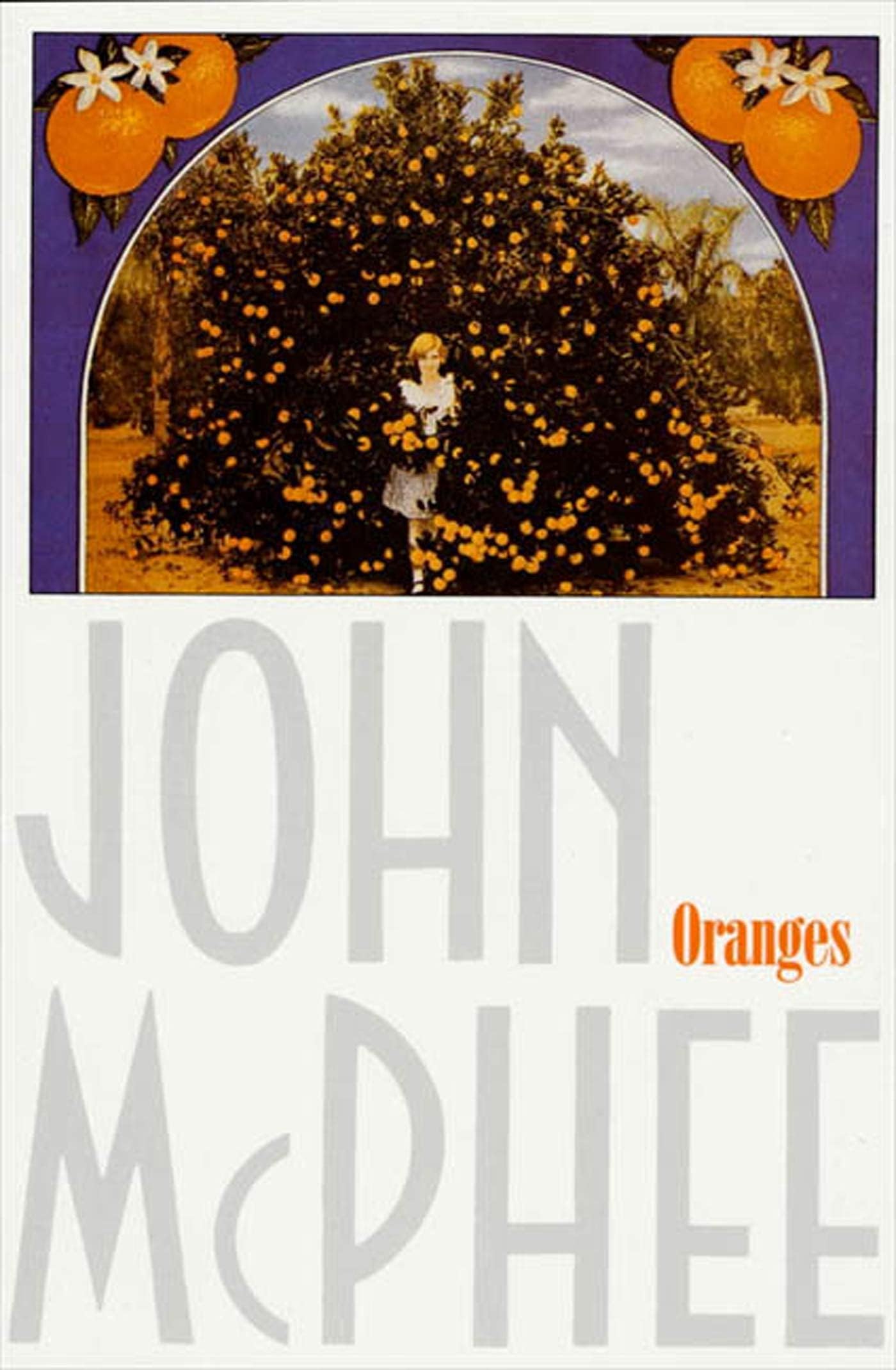
Oranges
Product ID: 4665511
Desertcart purchases this item on your behalf and handles shipping, customs, and support to Australia.
Oranges [McPhee, John] on desertcart.com. *FREE* shipping on qualifying offers. Oranges Review: Fruit, Economics, Agriculture and History Made Fascinating - I picked up this book because I was traveling to Florida and wanted something . . . . Florida-ish. Good pick! John McPhee, a New Yorker stalwart and author of at least 25 books, started out to write a New Yorker article on the subject of the orange industry in 1966 and ended up material with enough to create a book, which became Oranges. This particular edition came out in 2000 and bears a preface by the author, which explains his early career with The New Yorker and how and why the book got written. The text itself is not updated or appended to register changes in the industry since the mid-1960s, but that's okay. This is a surprisingly compelling and atmospheric narrative, even though it is fact-packed with economics and agricultural statistics. McPhee's inspiration was simply that he liked orange juice and wanted to find out where it came from. That took him to Florida where he found scientists, growers, and the entire history of a piece of fruit most of us take for granted, a native of China that was unknown in the Holy Land and the Western hemisphere at the time of Christ, that would not make it to the Americas until Columbus. For all its ubiquity in the modern world, citrus is a temperamental plant that requires particular soil and climatic conditions, not to mention careful grafting to maintain true products. There are many varieties of oranges--not just seedy, seedless and tangerine--and across history they have been valued by kings and inspired poetry. Ponce de Leon may have introduced them to the Florida mainland in the 16th century, to sustain troops. The coming of the railroad and improved shipping popularized the fruit produced in the Jacksonville, St. John's River basin and Indian River regions (northern and central Florida) in the 19th century, and an international industry was born. Fast forward to the 1960s and McPhee puts the reader in the midst of a highly evolved industry populated with creative entrepreneurs and scientists and power brokers who might be kings. McPhee concludes his tour at a time when juice concentrate is king in America. This book could benefit from a coda updating how the trends for organic and fresh ("never from concentrate," my bottle brags) have affected the industry, as well as the real estate development that has overrun former growing areas. Review: Sunshine in your Glass - For those of us who have had a glass of orange juice nearly every day of our lives, it is rather fascinating to learn a bit about the history and quality control of the modern industry that brings that delicacy to our kitchen. This is one of McPhee's earliest books, so it is a bit dated. But that doesn't matter. McPhee is such a talented writer and he packs so much information and insight in to a small book that it is well worth reading even though a half century has passed since it was first published. The ancient history of the fruit is still germane, and the description of the technological breakthroughs that brought us flash frozen, "concentrate", and flavor packs are still fascinating and relevant. Also, gaining a feeling for the many varieties of oranges, the weather and predator challenges faced by orange growers, and the rise of massive corporate producers as well as the place for some remaining family farms is worth placing in perspective. McPhee started with the simple joy of a small vendor peeling fresh oranges in the old Pennsylvania Station in New York City. Savoring an orange is still far more satisfying than drinking a technologically synthesized universal product, although that is what the vast majority of people settle for in this fast moving world.
| Best Sellers Rank | #62,543 in Books ( See Top 100 in Books ) #78 in Nature Writing & Essays #148 in Essays (Books) #489 in Contemporary Literature & Fiction |
| Customer Reviews | 4.4 out of 5 stars 561 Reviews |
C**G
Fruit, Economics, Agriculture and History Made Fascinating
I picked up this book because I was traveling to Florida and wanted something . . . . Florida-ish. Good pick! John McPhee, a New Yorker stalwart and author of at least 25 books, started out to write a New Yorker article on the subject of the orange industry in 1966 and ended up material with enough to create a book, which became Oranges. This particular edition came out in 2000 and bears a preface by the author, which explains his early career with The New Yorker and how and why the book got written. The text itself is not updated or appended to register changes in the industry since the mid-1960s, but that's okay. This is a surprisingly compelling and atmospheric narrative, even though it is fact-packed with economics and agricultural statistics. McPhee's inspiration was simply that he liked orange juice and wanted to find out where it came from. That took him to Florida where he found scientists, growers, and the entire history of a piece of fruit most of us take for granted, a native of China that was unknown in the Holy Land and the Western hemisphere at the time of Christ, that would not make it to the Americas until Columbus. For all its ubiquity in the modern world, citrus is a temperamental plant that requires particular soil and climatic conditions, not to mention careful grafting to maintain true products. There are many varieties of oranges--not just seedy, seedless and tangerine--and across history they have been valued by kings and inspired poetry. Ponce de Leon may have introduced them to the Florida mainland in the 16th century, to sustain troops. The coming of the railroad and improved shipping popularized the fruit produced in the Jacksonville, St. John's River basin and Indian River regions (northern and central Florida) in the 19th century, and an international industry was born. Fast forward to the 1960s and McPhee puts the reader in the midst of a highly evolved industry populated with creative entrepreneurs and scientists and power brokers who might be kings. McPhee concludes his tour at a time when juice concentrate is king in America. This book could benefit from a coda updating how the trends for organic and fresh ("never from concentrate," my bottle brags) have affected the industry, as well as the real estate development that has overrun former growing areas.
U**4
Sunshine in your Glass
For those of us who have had a glass of orange juice nearly every day of our lives, it is rather fascinating to learn a bit about the history and quality control of the modern industry that brings that delicacy to our kitchen. This is one of McPhee's earliest books, so it is a bit dated. But that doesn't matter. McPhee is such a talented writer and he packs so much information and insight in to a small book that it is well worth reading even though a half century has passed since it was first published. The ancient history of the fruit is still germane, and the description of the technological breakthroughs that brought us flash frozen, "concentrate", and flavor packs are still fascinating and relevant. Also, gaining a feeling for the many varieties of oranges, the weather and predator challenges faced by orange growers, and the rise of massive corporate producers as well as the place for some remaining family farms is worth placing in perspective. McPhee started with the simple joy of a small vendor peeling fresh oranges in the old Pennsylvania Station in New York City. Savoring an orange is still far more satisfying than drinking a technologically synthesized universal product, although that is what the vast majority of people settle for in this fast moving world.
J**A
Great book if you like oranges
This book will tell you where everything there is to know about oranges, including the vast number of varieties, how they are grown and other information. It's pretty old, but still useful. And the author is an excellent writer.
D**S
Interesting oranges... who knew...
Yes, when my friend recommended this to me I did not think the topic of oranges could be interesting. I was wrong. Even though it was written decades ago, it was packed with fascinating information about orange history, horticulture, breeding, grafting, juicing, et cetera. McPhee has a great writing style. Definitely a great read!
M**N
Who Knew?
I love oranges, but there may not be many people who could make reading about them so interesting. There are two things to be said: McPhee is a wonderful writer; and this book, originally written in the 1960s, tells you pretty much everything you need to know about oranges. (Did YOU know that most orange trees are not grown from orange seeds, and may grow from trunks of different citrus trees entirely--lemon, say? Did you know that in the 1960s, the annual orange crop in Florida alone was around 25 billion-with-a-b oranges? Have you ever heard of degrees Brix? And so on.) McPhee knows more about oranges than I thought was knowable except to an orange grower, and his writing is so good that you end up wishing he'd move all the way up and down the food pyramid, just because your meals would then be so much more interesting. But he does write on other topics. Read those books, too.
E**Y
Great history of Florida’s citrus industry
I was born and raised in Florida and attended Florida Presbyterian College, now Eckerd College. One of the benefactors was Ben Hill Griffen.
B**S
Made me crave an orange or two!
To write articles and books that will engage people and stand the test of time, journalists must be enthusiastic, curious, and tenacious about their subjects. Writer John McPhee displays all these qualities in the lively and entertaining Oranges. Rest assured the author saw every type of juicing machine he was allowed to while writing this book. Apparently always on the lookout for an interesting story, McPhee relates in the preface how an ad showing four seemingly similar oranges had different names. This intrigued him greatly, and he “had to get to work.” Littered throughout this mid-1960s classic by McPhee is personalized wording that demonstrate his doggedness to talk to experts and see firsthand what they do: “I was eager to return to a place where … people all but brushed their teeth in fresh orange juice”; “nearly all the visits I eventually made to specific growers, pickers, packers and others”; “my talks with him drifted conversationally”; and “I would like to have met Snake Man, but that proved to be impossible.” The observant McPhee takes helicopter rides and views orange groves from high above. He rides on tractors and walks within the lanes of the varied orange trees. He visits concentration plants and juice plants to smell the smells, taste the products, get up-close looks, and ask questions. He immerses himself in the unpretentious Florida citrus culture, talking in a down-to-earth way with the growers, pickers, big players, and others who play a part. In the final chapter, McPhee talks to the hard-nosed “orange baron” of Florida, Ben Hill Griffin, until three a.m. That’s dedication. At the same time, McPhee takes us far from Florida and tackles his subject on a worldwide level, vividly describing all historical realms of the fruit. The author remembers things from ads and studies oranges by reading a lot about them in diverse publications. Yes, growing oranges is a competitive, down-and-dirty business, but there is also a huge scientific and ancient element to the fruit—McPhee tells us that people have earned their doctorates studying oranges. He visits the Citrus Experiment Station at the University of Florida, and that’s when his intended magazine articles about oranges turn into a full-fledged book. Amid his fact-packed fixation on oranges, McPhee’s sense of humor is what gives Oranges its sweet kick. Even when he’s not trying to be humorous—the middle of the book, for instance, will expand your historical knowledge of oranges to horizons unimagined—there’s an underlying absurdity to McPhee’s manner, as if he, too, cannot fathom the depths he’s explored to relate the history of a most treasured food that breathes like you and I. Though he conveys the practical and healthful aspects of oranges, the journalist treats the fruit with a certain spice-of-life reverence and gives it an elegance it probably deserves. Further along, the content becomes a little less playful and more oriented toward the business and geography side of things. McPhee wants us to avoid concentrated orange juice, but he’s not preachy on the matter. This talented journalist is not a robot on autopilot writing about oranges. He brings readers into his journalistic journey via occasional first-person narration by being open about where he gets his material, funny about what he observes, and thorough in everything he reports (he saw “thirteen rocking chairs were set in a row” on Griffin’s porch). McPhee throws out a few data points and factoids by the dozens in some chapters—sometimes unrelated ones in successive sentences—but where he shines is when he lets us accompany him in the Florida sunshine to view what he is seeing and doing. The author is having fun. Based on the titles of his other books, McPhee has a wide range of interests. Lucky for oranges and everyone involved with the production of them, the author picked a topic many years ago that put a round piece of fruit on a pedestal. In the process he entertained and educated readers for decades to come.
K**E
I would not have picked up the book if it had not been recommended. McPhee's writing style is almost like you are ...
Even though this was written in the 60s, it is well worth the read, especially if you have any interest in oranges whatsoever. Read it while enjoying your morning OJ and you will never look at that beverage the same again. I would not have picked up the book if it had not been recommended. McPhee's writing style is almost like you are listening to a friend tell about a trip recently taken. While reading, I often forgot that this was written so many years ago. Never once thought about the history of the orange which was eye opening to me. I will be looking for oranges as I move through art museums. Read the book and you too will search our oranges in pieces of art. Interesting book done in a very readable style.
Trustpilot
4 days ago
5 days ago