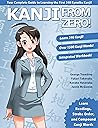

Kanji From Zero! is perfect for current students of Japanese who already know how to read hiragana and katakana. The book isn't just another kanji reference book. Instead it's designed to teach kanji and associated culture and related words to give a connection to kanji that other books ignore. Review: Kanji from Zero is fantastic! - Kanji from Zero I hope you can bear with the length of this review of “Kanji from Zero.” Before I get to the actual review of “Kanji From Zero,” I think it important to tell you how I learn, and what holds me back—how one little thing in a book on language learning can result in me not trusting anything else in the book. See, I have a shelf full of kanji books. Did I finish any of them? No. I’m not lazy, but the authors of all these books think I need no explanation, and I’m to take them at face value. Or they will dump too much information, leaving my head spinning. You can skip down a bit to get to the actual review. A book called “Remembering The Kanji” by James Heisig, came highly recommended. So I bought it. I have to admit, I was pretty excited because I was told it used mnemonics, a method of remembering through a story or visualization. I’m a huge fan of mnemonics. Each kanji comes with a little story to help you remember it. Awesome. Well, not awesome, as it turned out. I found Heisig’s book unbearable, like most of the kanji books on my shelf. To my dismay, it did not give you the Japanese reading of the kanji. Only the English. What? Why? Why add an additional step for the learner? But I tried to give it a real shot. I really did. Even though I found the stories for remembering the kanji worthless, I plodded along. Then I arrived at kanji number 17. The kanji for “I,” as the book says. I knew this was wrong. The kanji for “I, me” is 私 . I think I checked every single Japanese internet dictionary, and never found Heisig’s kanji for “I,” so I can’t show it to you. This triggered my mistrust of the “Remembering the Kanji” book. How many other kanji were wrong? One of my Japanese friends thought it might be a 500 year old version of “I.” A bit like using Shakespeare’s English in today’s world, right? But in the end, my friend wasn’t sure. And if I might quote Heisig for the story of this character, “The key word here should be taken in the general psychological sense of the ‘perceiving subject.’ Now the one place in our bodies that all five senses are concentrated in is the head, which has no less than five mouths: 2 nostrils, 2 ears, and 1 mouth. Hence, five mouths = I.” James Heisig, Remembering the Kanji. OK, are you still with me? Does that mnemonic work for you? I didn’t for me—especially since it isn’t even a commonly used kanji. KANJI FROM ZERO I freakin’ love this book! First, unlike the Heisig book, it gives you the Japanese readings. Wacky, right? I will say, you really do need to know kana (hiragana and katakana). If you’ve bought George Trombley’s other “Japanese from Zero” books, you’ll know kana by the end of book two of the series. Also, if you are a self learner, I can’t recommend these “Japanese From Zero 1, 2, 3, 4,” books series too highly. Book 5 comes out early 2017 according to the author. They are awesome. Each Kanji is broken down in a little box. The box includes kanji stroke order, kanji number & English meaning, stroke count, the official kanji reading (no “5 mouths” BS here!), kanji writing boxes for practice (though I would recommend getting a notebook, and writing them 30 or 40 times each), and my favorite part: kanji words. Though the book says there are 250 basic kanji, the “Kanji Words” section brings that up to about 1500 kanji words. Here’s why I like the “kanji words” section; it combines the kanji you just learned with kanji combinations to form new words using that kanji. For example, the kanji for 5 is 五, but you will also learn the combinations like 5th day of the month, 五日, or 五分 five minutes, and other combinations. Don’t worry, each kanji has the hiragana above it, so if you don’t know the Japanese word for “5 minutes” you’ll be learning that, too. Awesome! Or let’s say you’ve learned the kanji for “voice.” You’ll also learn combinations using that kanji, like singing voice, large voice, cheering, etc. The next section in each chapter is “Words you can write” with the kanji you just learned. Holy cow, I no longer feel like a 7 year old using only kana. I’m finally writing actual word combinations in real Japanese. Whew. Next is the Kanji meaning match. You’ll get the English word, then write the kanji opposite the word. The next section is “Fill in the kanji,” where you’ll get a Japanese sentence (in kana), and you fill in the blanks with kanji in those sentences. Next is “kanji matching” where you match the kanji with its Japanese word (written in hiragana). Next is a stroke order check where you simply circle the correct stroke order for a kanji. Pretty easy if you’ve written them a lot. Then at the end of the chapter is the answer key for the exercises in that chapter (no flipping to the back of the book! YES!). While I haven’t gotten this far in the book yet, some of the chapters have a “Compound kanji word puzzle.” It’s a bit like a crossword puzzle where two or more kanji make an entirely different word. Pretty cool. The only way to learn a language is to use the language. By the time you finish a chapter, those kanji will be drummed into your brain, with no mnemonics. I promise. To be honest, I originally tried coming up with my own mnemonics for the characters, but found it unnecessary. Also, on a trip to Little Tokyo here in Los Angeles, I started seeing the few kanji I’ve learned everywhere. I guess the kanji in “Kanji from Zero” teach the most commonly used kanji. I certainly didn’t have that experience with Heisig’s book (I mean, really, how often have you read the word “gallbladder?”). The one thing I didn’t quite understand in “Kanji from Zero” is in the introduction section A-6. It states that students are often confused as to whether to use the “Chinese reading” or the “Japanese reading.” I felt that this section needed a lot more explanation. But since the book uses small hiragana above each character, I assume this will clear itself up as I proceed through the book. If you are an absolute beginner in the Japanese language, I’d recommend doing “Japanese From Zero” books one and two, at least, before starting “Kanji from Zero.” It will help a lot. Review: Accessible kanji learning - I got a copy of Kanji from Zero last week and I have to say that I love this book. I'm taking Japanese classes and find that I'm expected to go at a much faster pace than I learn at, consequently my understanding of kanji and the various readings of them has been suffering whilst I try to cope with new grammar points and vocabulary, also I find my class textbook isn't user friendly and some days it stays unopened. What I was looking for was a user friendly, accessible textbook/workbook to use for self study and Kanji From Zero is perfect for this. Anyone looking to begin self-study Japanese should probably look at the companion Kanji From Zero books although I can only recommend these because I use the Kanji From Zero videos on Youtube where the author explains chapters from the books. I would recommend this book to anyone with knowledge of hiragana and katakana and a grasp of basic grammar. I think a few people may be disappointed that the book has 'only' 240 kanji. Personally I'm happy not to overwhelmed by having a huge number of kanji to learn at once. The author manages to go into detail on these 240 kanji, giving mnemonics, alternative readings, providing relevant vocabulary and discussing the use of radicals. I will happily wait for Book 2, well don't leave it too long though!
| Best Sellers Rank | #161,486 in Kindle Store ( See Top 100 in Kindle Store ) #19 in Japanese Language Instruction (Kindle Store) |
D**H
Kanji from Zero is fantastic!
Kanji from Zero I hope you can bear with the length of this review of “Kanji from Zero.” Before I get to the actual review of “Kanji From Zero,” I think it important to tell you how I learn, and what holds me back—how one little thing in a book on language learning can result in me not trusting anything else in the book. See, I have a shelf full of kanji books. Did I finish any of them? No. I’m not lazy, but the authors of all these books think I need no explanation, and I’m to take them at face value. Or they will dump too much information, leaving my head spinning. You can skip down a bit to get to the actual review. A book called “Remembering The Kanji” by James Heisig, came highly recommended. So I bought it. I have to admit, I was pretty excited because I was told it used mnemonics, a method of remembering through a story or visualization. I’m a huge fan of mnemonics. Each kanji comes with a little story to help you remember it. Awesome. Well, not awesome, as it turned out. I found Heisig’s book unbearable, like most of the kanji books on my shelf. To my dismay, it did not give you the Japanese reading of the kanji. Only the English. What? Why? Why add an additional step for the learner? But I tried to give it a real shot. I really did. Even though I found the stories for remembering the kanji worthless, I plodded along. Then I arrived at kanji number 17. The kanji for “I,” as the book says. I knew this was wrong. The kanji for “I, me” is 私 . I think I checked every single Japanese internet dictionary, and never found Heisig’s kanji for “I,” so I can’t show it to you. This triggered my mistrust of the “Remembering the Kanji” book. How many other kanji were wrong? One of my Japanese friends thought it might be a 500 year old version of “I.” A bit like using Shakespeare’s English in today’s world, right? But in the end, my friend wasn’t sure. And if I might quote Heisig for the story of this character, “The key word here should be taken in the general psychological sense of the ‘perceiving subject.’ Now the one place in our bodies that all five senses are concentrated in is the head, which has no less than five mouths: 2 nostrils, 2 ears, and 1 mouth. Hence, five mouths = I.” James Heisig, Remembering the Kanji. OK, are you still with me? Does that mnemonic work for you? I didn’t for me—especially since it isn’t even a commonly used kanji. KANJI FROM ZERO I freakin’ love this book! First, unlike the Heisig book, it gives you the Japanese readings. Wacky, right? I will say, you really do need to know kana (hiragana and katakana). If you’ve bought George Trombley’s other “Japanese from Zero” books, you’ll know kana by the end of book two of the series. Also, if you are a self learner, I can’t recommend these “Japanese From Zero 1, 2, 3, 4,” books series too highly. Book 5 comes out early 2017 according to the author. They are awesome. Each Kanji is broken down in a little box. The box includes kanji stroke order, kanji number & English meaning, stroke count, the official kanji reading (no “5 mouths” BS here!), kanji writing boxes for practice (though I would recommend getting a notebook, and writing them 30 or 40 times each), and my favorite part: kanji words. Though the book says there are 250 basic kanji, the “Kanji Words” section brings that up to about 1500 kanji words. Here’s why I like the “kanji words” section; it combines the kanji you just learned with kanji combinations to form new words using that kanji. For example, the kanji for 5 is 五, but you will also learn the combinations like 5th day of the month, 五日, or 五分 five minutes, and other combinations. Don’t worry, each kanji has the hiragana above it, so if you don’t know the Japanese word for “5 minutes” you’ll be learning that, too. Awesome! Or let’s say you’ve learned the kanji for “voice.” You’ll also learn combinations using that kanji, like singing voice, large voice, cheering, etc. The next section in each chapter is “Words you can write” with the kanji you just learned. Holy cow, I no longer feel like a 7 year old using only kana. I’m finally writing actual word combinations in real Japanese. Whew. Next is the Kanji meaning match. You’ll get the English word, then write the kanji opposite the word. The next section is “Fill in the kanji,” where you’ll get a Japanese sentence (in kana), and you fill in the blanks with kanji in those sentences. Next is “kanji matching” where you match the kanji with its Japanese word (written in hiragana). Next is a stroke order check where you simply circle the correct stroke order for a kanji. Pretty easy if you’ve written them a lot. Then at the end of the chapter is the answer key for the exercises in that chapter (no flipping to the back of the book! YES!). While I haven’t gotten this far in the book yet, some of the chapters have a “Compound kanji word puzzle.” It’s a bit like a crossword puzzle where two or more kanji make an entirely different word. Pretty cool. The only way to learn a language is to use the language. By the time you finish a chapter, those kanji will be drummed into your brain, with no mnemonics. I promise. To be honest, I originally tried coming up with my own mnemonics for the characters, but found it unnecessary. Also, on a trip to Little Tokyo here in Los Angeles, I started seeing the few kanji I’ve learned everywhere. I guess the kanji in “Kanji from Zero” teach the most commonly used kanji. I certainly didn’t have that experience with Heisig’s book (I mean, really, how often have you read the word “gallbladder?”). The one thing I didn’t quite understand in “Kanji from Zero” is in the introduction section A-6. It states that students are often confused as to whether to use the “Chinese reading” or the “Japanese reading.” I felt that this section needed a lot more explanation. But since the book uses small hiragana above each character, I assume this will clear itself up as I proceed through the book. If you are an absolute beginner in the Japanese language, I’d recommend doing “Japanese From Zero” books one and two, at least, before starting “Kanji from Zero.” It will help a lot.
P**S
Accessible kanji learning
I got a copy of Kanji from Zero last week and I have to say that I love this book. I'm taking Japanese classes and find that I'm expected to go at a much faster pace than I learn at, consequently my understanding of kanji and the various readings of them has been suffering whilst I try to cope with new grammar points and vocabulary, also I find my class textbook isn't user friendly and some days it stays unopened. What I was looking for was a user friendly, accessible textbook/workbook to use for self study and Kanji From Zero is perfect for this. Anyone looking to begin self-study Japanese should probably look at the companion Kanji From Zero books although I can only recommend these because I use the Kanji From Zero videos on Youtube where the author explains chapters from the books. I would recommend this book to anyone with knowledge of hiragana and katakana and a grasp of basic grammar. I think a few people may be disappointed that the book has 'only' 240 kanji. Personally I'm happy not to overwhelmed by having a huge number of kanji to learn at once. The author manages to go into detail on these 240 kanji, giving mnemonics, alternative readings, providing relevant vocabulary and discussing the use of radicals. I will happily wait for Book 2, well don't leave it too long though!
M**M
Perfect solution to learn Japanese for homeschoolers and self studiers
My teen son was homeschooled since eighth grade. One of his main interests turned out to be languages. In his first couple years of homeschool, he attempted to learn Japanese using Rosetta Stone (he went through the full first level and most of the second), using the first Genki book and workbook, various other beginner books (as I scroll through the popular books on Japanese language in Amazon, I see we own many of the titles...), and by doing a few other things like us just going through flashcards of hiragana and katakana. Halfway through his Junior/11th grade year (Jan 2017), he told me he felt like he learned a lot of Japanese, but said he wouldn't be able to put together even the simplest sentence - written or spoken - if he was put to the test. As with all things homeschool, there's some trial and error, and we occasionally try something that doesn't work. This was definitely one of those things. I knew he was frustrated, but not at all ready to give up. At that point we came across Japanese From Zero! Book 1. When he started using that first workbook and discovered the hundreds of free videos the author, George Trombley, put on YouTube, I mean, this kid was transformed. He ate that book up, and book 2. By the end of that school year (June 2017) he'd gone from saying he couldn't say "How are you?" to being comfortable enough to converse with teens in Japan. In the summer he completed book 3. Senior/12th grade year (starting September 2017) he completed Japanese From Zero! 4 and Kanji From Zero! 1. He kept up with the supplemental videos from George. When George asks a question, I'm continually impressed at how my son replies correctly, without fail, before George supplies the answer. My son is telling me to say he didn’t feel he started actually learning Japanese before he opened the first From Zero! book. These books and the free supplemental videos are by far the best system we've found for any English speaker who wants to learn Japanese. UPDATE MAY 2019: My son graduated homeschool Spring 2018. He asked if he could take a placement test for Japanese at the university he was planning to attend. Recall he’d only gone through George Trombley’s Japanese From Zero! books 1-4 plus Kanji from Zero! book 1 and the free YouTube videos. From the placement test, he was put in 3rd semester Japanese. He likely tested into 4th semester, but as that class is only offered each Spring, he was happy to go into 3rd semester. How did he do? He got straight As - a 4.0 in both 3rd and 4th semester, and he’s continuing with his Japanese studies this coming year. Each class was worth 5 credits, and for the two classes he skipped, he was given 4 credits each. So for 3rd semester he got 13 credits for his one Japanese class, and another 5 in 4th semester. Just from self studying these books in homeschool.
R**A
Great for intermediate learners too!
This is one of my all-time favorite Japanese textbooks that I’ve bought! First of all, there’s no romaji for readings, and that already made me very happy. It’s a struggle when I’m trying to practice utilizing more katakana and hiragana to speed up my reading, but then everything is in romaji! Luckily, this book knew what’s good for me. I was a bit skeptical seeing as it was labelled “Kanji from ZERO,” seeing as I wasn’t exactly new to kanji, however, I feel anyone can utilize this and find something new. I highly recommend this book if you’re stuck in a plateau with kanji and you’re anywhere from beginner to upper intermediate in Kanji skill, but as I said, I think anyone can find some benefit in this. Even if you know the kanji for numbers (一、ニ、三、etc.), do not skip the first section, especially if the different readings throw you off. This book has the definitions, stroke order, and readings listed on the first couple pages of a section, then it goes into writing actual words that utilize that kanji. After that, you have a little more fun practice with fill in the blank, cross-matching, etc. etc. Even as you continue to new sections, older kanji and their multiple readings come back up to make sure you don’t forget them when taking in new information. After five sections, you have a little test on that area and it honestly felt great to look at sentences without English translation and actually have to work it out to put the correct kanji in. If the price tag freaks you out, don’t worry, it freaked me out too, but this textbook is a nice size! I’d get textbooks from public school that were this size for ten times the price, and I feel I learn more in this one anyways. And for the price you pay, you’re saving a ton on really expensive language learning programs, and you actually get to hold this. If you’re unsure because you’re not a total beginner, trust me, you’ll find something new in this.
S**S
The Best Book to Learn Kanji!
Kanji From Zero is a truly great book for learning kanji. The 240 kanji it teaches are divided up into 39 lessons, each lesson covering 5-7 kanji. I really like that each lesson is not an overwhelming number of kanji, and that the kanji are taught together in logical groupings, rather than the random order a lot of other books use. For example, you learn numbers, or colors, or direction words together. Each lesson begins by introducing the new kanji for that lesson. For each kanji you are given it's kanji number and what it means in English, the proper stroke order, how many strokes it is, how to read it, a section to practice writing it, and several words that use every reading of that kanji. This is followed by a section for kanji usage which gives a lot of detailed information on how the kanji are used. There are also several exercises including practice writing words that use the kanji, fill in the blanks, matching kanji to their meaning, matching kanji to their reading, and checking stroke order. The final part of each lesson is an answer key for that lesson's exercises. I'm sure there's someone out there might ask "why buy this book when it only teaches 240 kanji?" The answer to that is simple. Sure you can buy other books that have 2000 kanji in them, but they will not give you even a fraction of the knowledge of each of those kanji as this book will. Sure with those books you might be able to recognize what 2000 kanji mean, but you won't be able to read or speak Japanese, so big deal. Also Kanji From Zero 1 is just the first book of what will be a 5 book series.
W**G
Great Kanji learning material (paperback version)
This is a review for the Paperback version of the book. TLDR: If you are struggling with Learning Kanji, give this book a try. Worked very well for me. Long: I'll be honest... I was expecting some "Anime" version of study with "Manga" style learning... But being completely stuck learning Kanji I did give this book a try... And was pleasantry surprised by its quality. I've studied Japanese for about four to five years. Have a reasonable handle on Kana-s and can listen and speak. Practice over video calls with teacher from Japan, according to whom I was about the level of a preschooler. The book helped me get to the next level. What this book has so far for me (although I am about 1/3 into it): - The "common" use Kanji, 240 total. - Explanation of how to write these Kanji - stroke order and tips - History and Trivia behind some Kanji (which helps a lot to dilute the dry study of Kanji) - Very brief mnemonic techniques/mentions, although they say specifically the book is not about it - Very well structured exercise (I remember more from one set of exercise) The exercise sheets is what separated this book from the rest for me. What I would love to have for this book: - Online support, Companion app etc - Downloadable PDF of the exercise problems only (I dislike writing in books and like to redo exercises for memory retention) Overall - Highly recommended.
A**.
Informative and funny! The ultimate Kanji workbook!
This book is very helpful for me, and it should be with just about anyone who is learning Kanji. Upon ordering this book, I already knew half of the first 80 Kanji taught to level 1 Japanese students. But, the practice always helps. There is plenty of explanations about how Kanji is read and to help with recognition of the Kanji. Now, I am familiar with how the author, George Trombley, sets up his books. I also have the Japanese from Zero! books 1-3. This Kanji from Zero! book reminds me of his other books a lot. It teaches you while keeping you entertained. The only complaints that I have about this book is that I have to fight the binding in order to do the left hand pages. (I’m right handed.) I have no worries about the book falling apart, that’s for sure! Another thing is that the practice is repetitive. That is in his other books as well. I guess that it is to help take the edge off about the fact that you are learning a new language. You can get comfortable while working on the exercises in this book. And a lesson takes me 10 minutes at the most. So, it can fit into schedules fairly well.
A**C
Great Book
The Kanji from Zero book is great. It helps you learn stroke order, multiple readings of the kanji from onyomi to kunyomi, and it has you instantly using them to help remember what you've learned. The books from George Trombley have been an amazing help. I can confirm that they use casual and formal Japanese after having used with friends. I cannot find much in the way of complaints because the books and the subsequent youtube shows and lectures are so informative and fun. I find it easy to consume the lessons and remember them from the attitude and mindset it leaves you with. I seriously cannot give you a more strong recommendation than to buy these amazing books. It will give you the best chance to learn Japanese and be confident. Also, the community that follows this is helpful too.
M**.
Learning Kanji? Then try this book.
Kanji from Zero is a spin off book from the, Japanese from Zero series written by George Trombley and Mrs Kanako Hatanaka. By the time this book was released I already had a good understanding of the Kanji symbols. However, I personally use this as a reference book even today to freshen up the old memory. If you are following the from Zero series then Kanji will be introduced in book 3 but this one does go into much more detail and focuses just on Kanji. It works well as a standalone book or a complementary of the third. The book is written in English but you will still need to know Katakana and Hiragana for both the examples and the questions. As for typos and mistakes, I’ve gone through this book several times and have yet to find a single one. The book is split into several chapters with each chapter having around seven Kanji symbols. So using the first chapter as an example, you’re given the first seven kanji, which are also the numbers 1-7. It shows you the stroke order using miniature arrows with numbers above them to ensure you draw them in the correct order. In case you are unaware, writing Kanji in the correct stroke order is important for both appearance and time saving. Next to the symbol there are some blank boxes for you to practice writing in if you so wish. I personally used graph paper rather then the book. Below that, you are given four samples of the symbols in use so for example, the Kanji for one will be placed next to the symbol for month to create the word for January. (ichi = one, gatsu = month) Later on in that chapter, it will give a few sentences with a word missing in which you have to identify the correct word and also the correct Kanji symbol from the same chapter. However, fear not as on the last page you are given a complete list of answers. The one thing I can praise this book for is not falling for the ‘learn all the Kanji’s’ style that most other books seem to go for. Instead it opts for a smaller amount of around 240 and goes into more depth about how to write it, use it and combine it for maximum effect. The first Kanji book I ever got simply boasted about how it had hundreds of Kanjis yet it had no explanation of how to use them effectively. Kanji from Zero really is a case of quality over quantity. Now, for those of you working towards the N5 and wondering if this has enough Kanji in it then the answer is yes. I’m not entirely sure but if I remember correctly, the N5 exam requires knowledge of the first 100 symbols and this book covers all of them. Overall, the book is one of the best Kanji learning tools on the market. As I previously stated it really is quality over quantity. Like a good dictionary, this book will be a very useful tool to have for your Japanese learning.
A**R
i love george
as I go through the book, i'm seeing more and more kanji in other places (japanese twitter accounts that I follow, japanese gaming channels on youtube that I like, japanese levels in super mario maker, etc.) that I can understand. I really like the book, it teaches you the first 2 grades worth of kanji that japanese students study in school, so I kind of feel like im a first grader again, only this time japanese.
M**S
Ordentliches Lernbuch für Fortgeschrittene
Einige wichtige Infos vorweg: - das Buch ist in schwarz-weiß - es ist auf englisch - etwas mehr als 400 Seiten - NICHT für Anfänger empfohlen, da man mindestens alle Hiragana Schriftzeichen kennen und können muss Dieses Buch eignet sich perfekt, um in die japanischen Kanji einzusteigen. Man MUSS allerdings die Hiragana beherrschen und halbwegs gut englisch können. Die Katakana werden nicht zwingend benötigt, da immer eine passende englische Übersetzung dazusteht. Auf über 400 Seiten wird mit Beispielen und Übungen der erste Schritt getan, um Kanji ordentlich zu verstehen. Der Fokus liegt hier überwiegend auf Kanjis, die man wirklich braucht und schnell lernen sollte (Zahlen, Wochentage, Monate, Geld, Kanjis die man zur Kommunikation braucht). Man ernt die einzelnen Kanji, indem man sie zuerst ein paar mal selber schreibt. Darauf folgen dann verschiedene Übungen und Fragen, wie man sie aus der Schulzeit kennt. Beispiel: I match well with Tanaka. Dort stehen dann ein paar Hiragana und man muss in die Lücken die passenden Kanji einsetzen. Zum selbstständigen Lernen eignet sich das Buch optimal.
V**A
Il migliore
La migliore serie per imparare il giapponese, secondo me.
B**.
Parece ser um ótimo livro para começar a aprender Kanjis
Estou estuando japonês por conta própria e estava em busca de livros que me guiassem com os primeiros kanjis. Eu pesquisei muito e levando em consideração o custo benefício, esse livro me pareceu a melhor opção. Há muitas avaliações positivas em relação a ele, levei isso em conta também. A maioria dos livros de japonês separa o livro texto do livro de prática, o que acaba ficando inviável, pois um só um livro já é super caro e você ter que, obrigatoriamente, comprar 2 livros para ter todo o conteúdo necessário para estudar não dá né. Ponto positivo pro KDZ1 que une as duas coisas em um livro só. Por conta disso, é um livro bem grosso, não pensei que seria tão pesado. Parece livro de escola mesmo. Ao meu ver, acho que vou conseguir estudar com ele, pelo menos todos os Kanji N5 e alguns N4. Sobre ser em inglês: não sou fluente, mas meu inglês é B1 mais ou menos, consigo ler a maior parte das coisas, mas óbvio que 1 palavra ou outra às vezes preciso pesquisar a tradução para entender. Mas não se preocupe quanto a isso, pois a maior parte é mesmo pra você conseguir saber o significado do kanji ou palavra, visto que neste livro há muito pouco de teoria e explicações mirabolantes, ele é bem direto ao ponto até onde vi. No entanto, não recomendo para quem é A1 e começo do A2 de inglês, pois não vai conseguir avançar direito aqui, tendo sempre que parar para traduzir. Ainda não comecei a estudar por ele, pois antes quero terminar o Japanese from Zero 1 e 2 que é que o povo recomenda. Ideal também que você já saiba todos os kana. Outro detalhe também é que nenhum kanji terá furigana... Ele será apresentado com seu significado, ordem de traços e as principais leituras kun e on. Então, depois disso você precisa ir memorizando mesmo. Nessa hora, é bom usar o Anki. No mais, volto aqui quando tiver estudado mais por esse livro para saber se ele de fato funciona rsrsrs. Sobre a entrega da Amazon, impecável como sempre. Atualmente é o melhor lugar para se comprar livros, entrega rápida até quando tem feriado. Comprei na semana anterior ao Carnaval e mesmo assim teve atualização do transporte no feriado. Amo esse site. ♥ O livro veio com alguns amassado nas pontas, mas nada de mais. Tudo perfeito.
Trustpilot
1 month ago
1 month ago